Are quartz countertops being banned? What California’s draft rule means in La Grange Highlands
No. Quartz countertops aren’t banned in La Grange Highlands. On September 16, 2026, California’s worker safety agency drafted an emergency rule to stop shops in that state from cutting engineered stone with more than 1 percent silica. It protects the workers who cut slabs. A finished top in your kitchen isn’t the concern.

What did California actually propose?
A ban on making and cutting high-silica engineered stone, for employers in California. The Cal/OSHA advisory committee page posted a discussion draft dated September 16, 2026, titled “Crystalline Silica Activities Strictly Prohibited,” a proposed new section 5204.1 of the state’s safety rules. Comments were due September 30.
The draft follows a vote in May. The California Department of Industrial Relations announced on May 22, 2026 that its Standards Board voted unanimously to start the process of prohibiting fabrication and installation of artificial stone with more than 1 percent crystalline silica, and asked for an emergency finding to move it faster.
Occupational Health & Safety magazine summarized the draft on September 28. Starting 60 days after the rule takes effect, employers could not manufacture or fabricate artificial stone over 1 percent crystalline silica by weight. It covers countertops, backsplashes, walls, flooring and waterfall edges, and it covers cutting, grinding, drilling, routing, polishing and joining. Slabs bought before the rule takes effect are exempt for a while, but their fabrication would have to stop 180 days after that date.
Does the California quartz ban apply in Illinois?
No. It’s a California safety order for California employers. Nothing in the draft changes what you can buy or install in La Grange Highlands or the towns around it.
Shops everywhere already work under federal rules. OSHA’s silica standard for general industry, 29 CFR 1910.1053, limits a worker’s exposure to 50 micrograms of silica per cubic meter of air, averaged over an 8-hour day. OSHA and NIOSH also publish a hazard alert for people who make, finish and install natural and manufactured stone countertops.
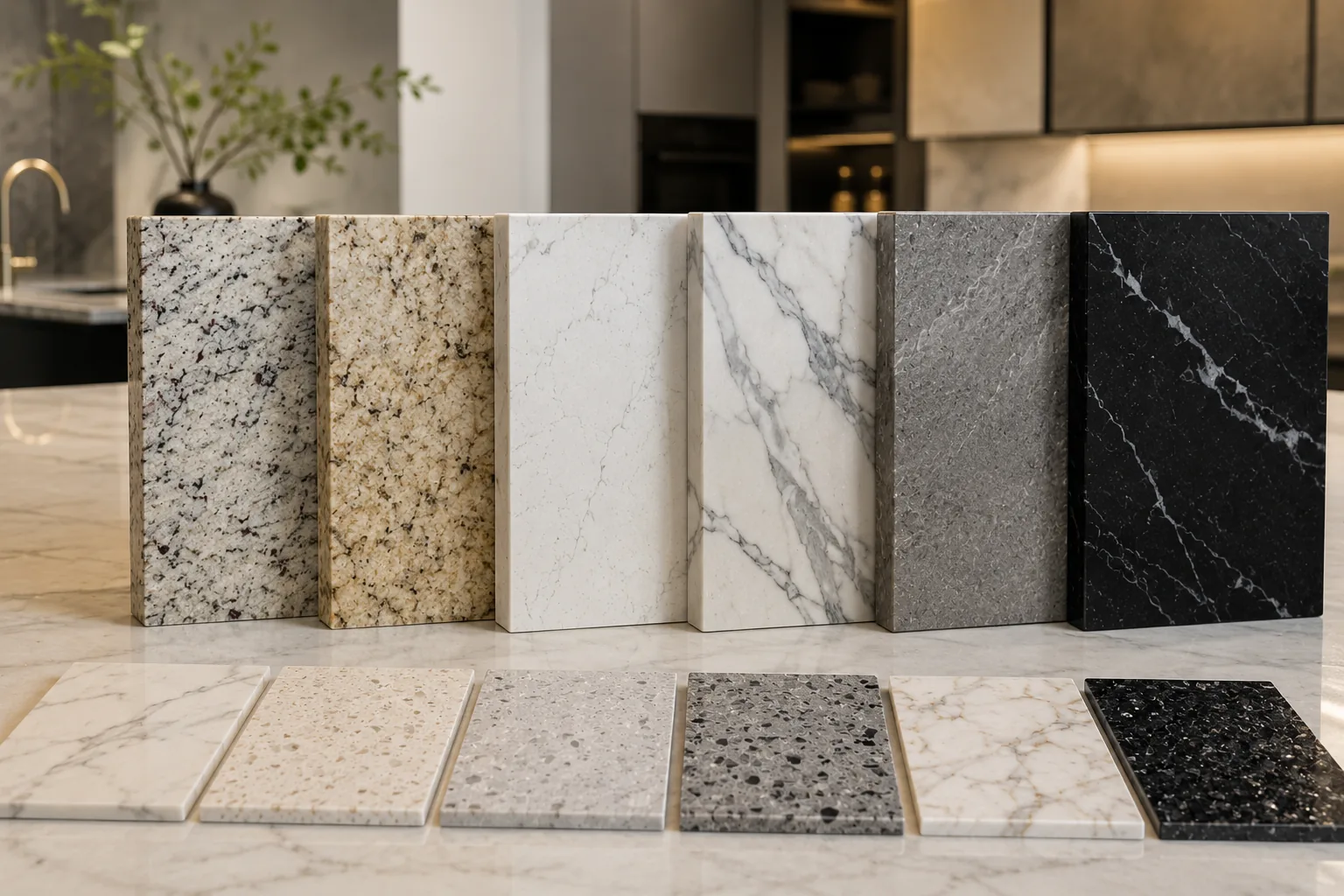
We still sell and arrange fabrication for all four stones on our countertops page: granite, marble, quartz and quartzite.
Are quartz countertops safe in my home?
Yes, for everyday use. The danger is fine dust made when stone is cut, ground or polished. A Newsweek explainer from August 2026 puts it plainly: the key risk comes from breathing silica dust during work, rather than simply owning or using a quartz countertop in a home.
A top that’s already installed doesn’t shed that dust when you chop vegetables or wipe it down. The one time it matters at home is if the top gets cut or drilled later, for example a new faucet hole or a cooktop swap. That’s a job for a pro with water and dust control, never a dry cut with a grinder in the kitchen. NIOSH’s guidance to countertop shops is to work wet, catch the dust at the tool, and use respirators when that isn’t enough.
How much silica is in quartz, granite, quartzite and marble?
Engineered quartz has the most, and some natural stone has a lot too. NIOSH wrote in 2014 that quartz surfacing may contain up to 93 percent crystalline silica, and granite less than 45 percent.
| Stone | What it is | Silica |
|---|---|---|
| Quartz (engineered) | Crushed quartz held with resin | Up to 93 percent crystalline silica (NIOSH) |
| Granite | Natural stone | Less than 45 percent crystalline silica (NIOSH) |
| Quartzite | Natural stone | At least 80 percent quartz by volume (British Geological Survey definition, via Wikipedia) |
| Marble | Natural stone | Mostly calcite or dolomite, carbonate minerals (Wikipedia) |
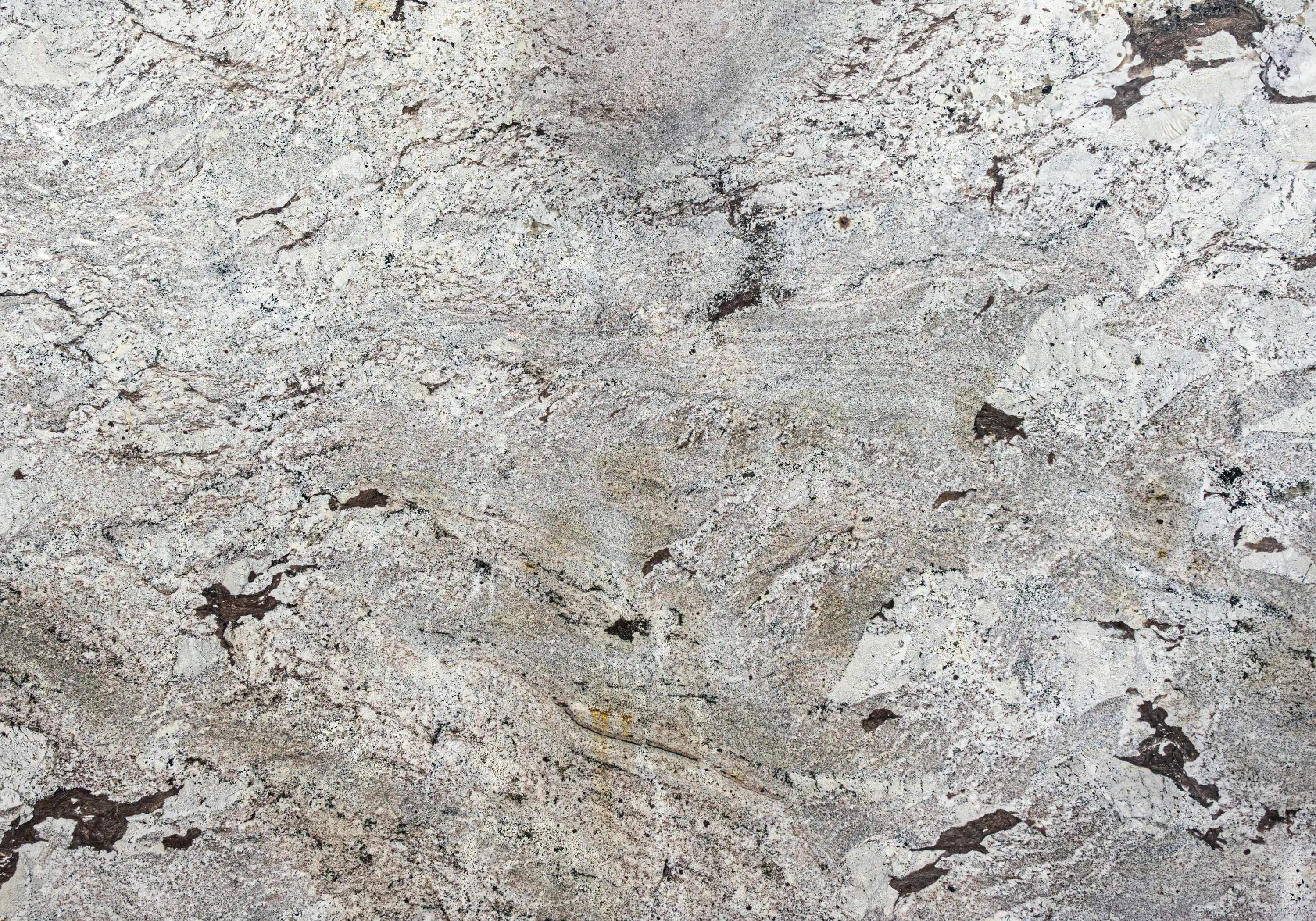
So “natural” doesn’t mean silica free. Quartzite is mostly quartz, and California’s draft is aimed only at artificial stone. Marble is a different mineral, but it’s also softer and etches with acids. Our side by side guide to quartz, quartzite, granite and marble covers how each one holds up to stains, heat and daily use.
Should I still choose quartz for my kitchen?
If it suits how you cook and clean, yes. The news is about worker safety in shops. It doesn’t change how quartz performs on your counter.
Some people will feel differently after reading about the workers who got sick. The Department of Industrial Relations release notes that the average age of workers who died of the disease was under 50. If that weighs on you, granite and marble both suit a kitchen like the one above. Our post on quartz or granite for a busy family kitchen compares the two for everyday wear, and the one on quartzite or marble for an island helps if you want a natural stone island.
What should I ask before my countertop is cut?
Ask how the slab will be cut and where. The OSHA and NIOSH hazard alert covers making, finishing and installing countertops, so some of the work can happen in your kitchen as well as the shop. Good questions to bring:
- Is the slab cut with water or a dust collector at the tool?
- Will any cutting or edge work happen in my kitchen, and how will the dust be handled there?
- Can the sink and faucet holes be cut in the shop, so less is cut on site?
- If I change a faucet or cooktop later, who can recut the top properly?
Planning the sink and faucet early helps with that last point. Pick the sink and decide how many faucet holes you need before templating, so the openings are made once. Our installation page walks through how measuring, templating and fitting are arranged.
Before you visit, write down your sink model and faucet hole count, and look at the four stones side by side on the countertops page. Bring the two you like best.
Sources
- Cal/OSHA, Emergency Silica Advisory Committee meetings (September 16, 2026 discussion draft) (opens in a new tab)
- California Department of Industrial Relations, Standards Board Advances Efforts to Protect Workers from Silicosis (May 22, 2026) (opens in a new tab)
- Occupational Health & Safety, Cal/OSHA Moves Toward Emergency Silica Restrictions for Engineered Stone (opens in a new tab)
- OSHA, Silica, Crystalline: General Industry and Maritime (opens in a new tab)
- NIOSH, Silica Hazards from Engineered Stone Countertops (opens in a new tab)
- Newsweek, What Is Silicosis? What To Know As Hundreds Fall Ill From Stone Countertops (opens in a new tab)
- Wikipedia, Quartzite (opens in a new tab)
- Wikipedia, Marble (opens in a new tab)