Quartz, quartzite, granite or marble: which countertop fits your kitchen?
Quartz is engineered from crushed quartz and resin, so it resists stains but should be kept away from hot pans. Quartzite, granite and marble are natural stone. True quartzite and granite are hard and resist etching; marble is softer calcite that acids like lemon juice can etch. HausRack in La Grange Highlands, IL sells all four and arranges templating, fabrication and installation.
The short answer
- Least upkeep: quartz. It never needs sealing, but keep hot pans off it.
- Natural stone that takes a busy kitchen: granite or true quartzite.
- The classic veined look: marble, if you’re fine with dull spots where acids land.
- Not sure yet: see each one on your own cabinets in a 3D plan before you choose.
Two questions decide most choices: how hard you cook, and how much care you’ll give a counter.
What is a quartz countertop made of?
Quartz countertops are engineered stone. Crushed quartz makes up about 90 percent or more of the slab by weight, and a polyester resin holds it together. Because the slab is nonporous, coffee, wine and oil sit on the surface instead of soaking in, so quartz never needs sealing. The color and pattern stay consistent from slab to slab, which helps when a kitchen needs more than one piece.
The resin is the one weak spot. A hot pan set straight on the counter, or a sudden change in temperature, can damage it, so makers tell you to use trivets. The resin isn’t fully stable in sunlight either, which is why quartz isn’t meant for outdoor kitchens.
Is quartzite a natural stone?
Yes. Quartzite starts as quartz-rich sandstone that heat, pressure and chemical activity deep in the earth turn into solid rock. It’s mostly quartz, so it rates about 7 on the Mohs hardness scale, and it stands up well to wear on countertops. Household acids don’t attack quartz, so true quartzite resists etching. Every slab is different, and many look a lot like marble.
Names in the stone trade are loose, though. On the Houzz thread “Quartz or Quartzite,” a stone professional warns that marble is sometimes sold as quartzite, and suggests an acid test or a scratch test before you buy.
How is granite different?
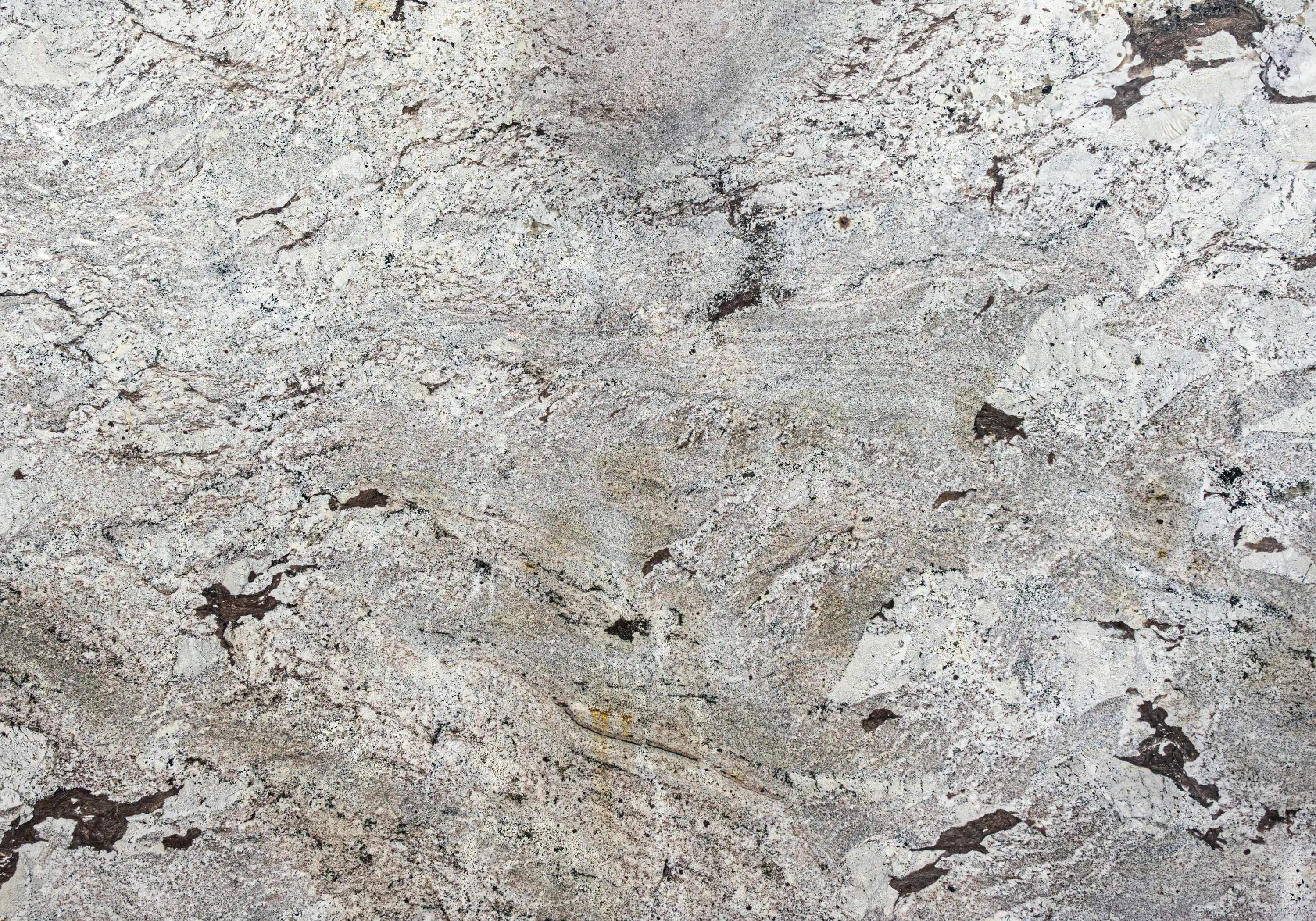
Granite is an igneous rock, made mainly of quartz and feldspar with smaller amounts of mica and other minerals. Its grains lock together, which makes it hard and durable, and every slab has its own pattern. In the stone trade, “granite” covers more than the geologist’s granite: stones with visible, interlocking grains that are harder than marble are often sold under the name.
Sealing is less of a chore than people expect. The Natural Stone Institute says most granite countertops don’t need to be sealed, though many benefit from it. Ask about the slab you choose. Like the other natural stones, granite handles heat better than engineered quartz, but a trivet is still the safe habit.
Why does marble get dull spots?
Marble is limestone changed by heat and pressure. It’s mostly calcite, which rates 3 on the Mohs scale and reacts with acids. Lemon juice, vinegar, tomato sauce or wine can leave a dull spot where they sat. That’s etching: a change in the surface of the stone, not a stain.
The Natural Stone Institute says it often makes sense to seal marble. A sealer helps against stains, but it doesn’t change the calcite, so acids can still etch. One homeowner on Houzz tested marble, quartzite and granite samples with fourteen kitchen liquids: the vinegars and citrus juices etched the marble badly, while the quartzite and granite held up far better.
Some people like how marble wears in over the years and choose it anyway. Just go in knowing what to expect.
How do the four compare side by side?
| Made of | quartz is engineered from crushed quartz and resin; quartzite, granite and marble are natural stone. |
|---|---|
| Heat | the three natural stones handle heat better than quartz, whose resin can be damaged. Use trivets on all four. |
| Acids | true quartzite and granite resist etching, and quartz shrugs off everyday spills. Marble etches. |
| Sealing | quartz never needs it. Most granite doesn’t, though many slabs benefit. Marble often should be sealed. Ask about each quartzite slab. |
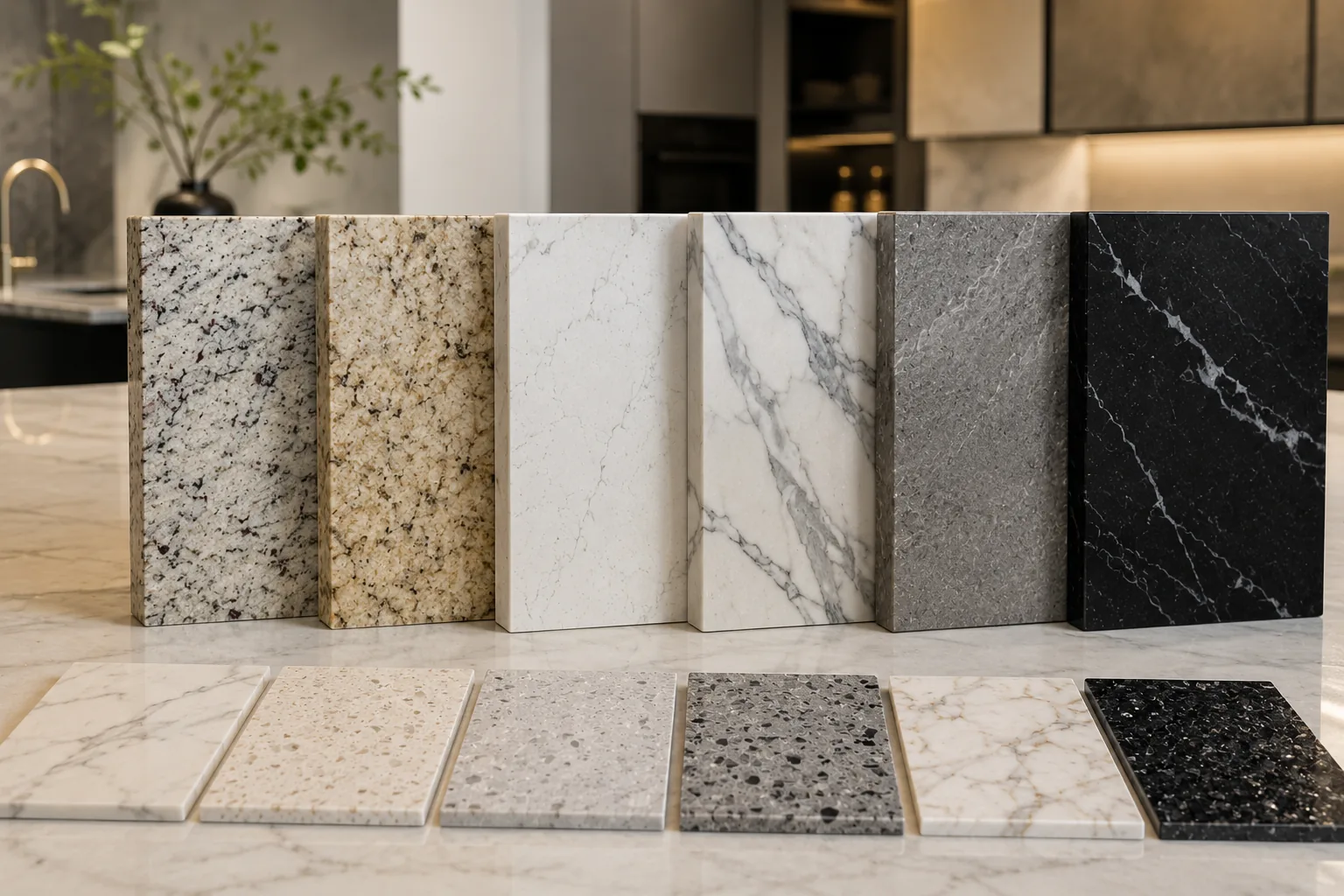
| Look | quartz stays consistent from slab to slab. Natural stone varies, so look at a real sample before you decide. |
Can I see the countertop with my cabinets first?
Yes. We plan kitchens in 3D, so you see the countertop with your kitchen cabinets before anything is cut. It’s the easiest way to tell whether a busy granite will compete with a detailed door, or whether a veined quartzite looks best against simple shaker doors.
What happens between choosing a stone and installing it?
- Visualize: we plan the counters with your cabinets in 3D.
- Measure: we arrange templating, so the counters are cut to fit your kitchen.
- Fabricate: we arrange fabrication in granite, marble, quartz or quartzite.
- Install: trusted installers set the counters. Ask about the warranty on the stone you choose.
Here’s more on how installation works, from planning to the day the counters go in.
What about bathroom countertops?
A bathroom top is a separate question from a kitchen one. Depending on the bathroom vanity, the top is marble, quartz, engineered stone, sintered stone or one-piece porcelain, and each model page says which. Call (708) 449-4055 to confirm exactly what comes with the vanity you pick.
Sources
- Geology.com, Quartzite (opens in a new tab)
- Geology.com, Granite (opens in a new tab)
- Geology.com, Marble (opens in a new tab)
- Wikipedia, Engineered stone (opens in a new tab)
- Natural Stone Institute, Sealing stone (opens in a new tab)
- Houzz, “Quartz or Quartzite” discussion (opens in a new tab)
- Houzz, “Etching tests on marble, quartzite, and granite” discussion (opens in a new tab)