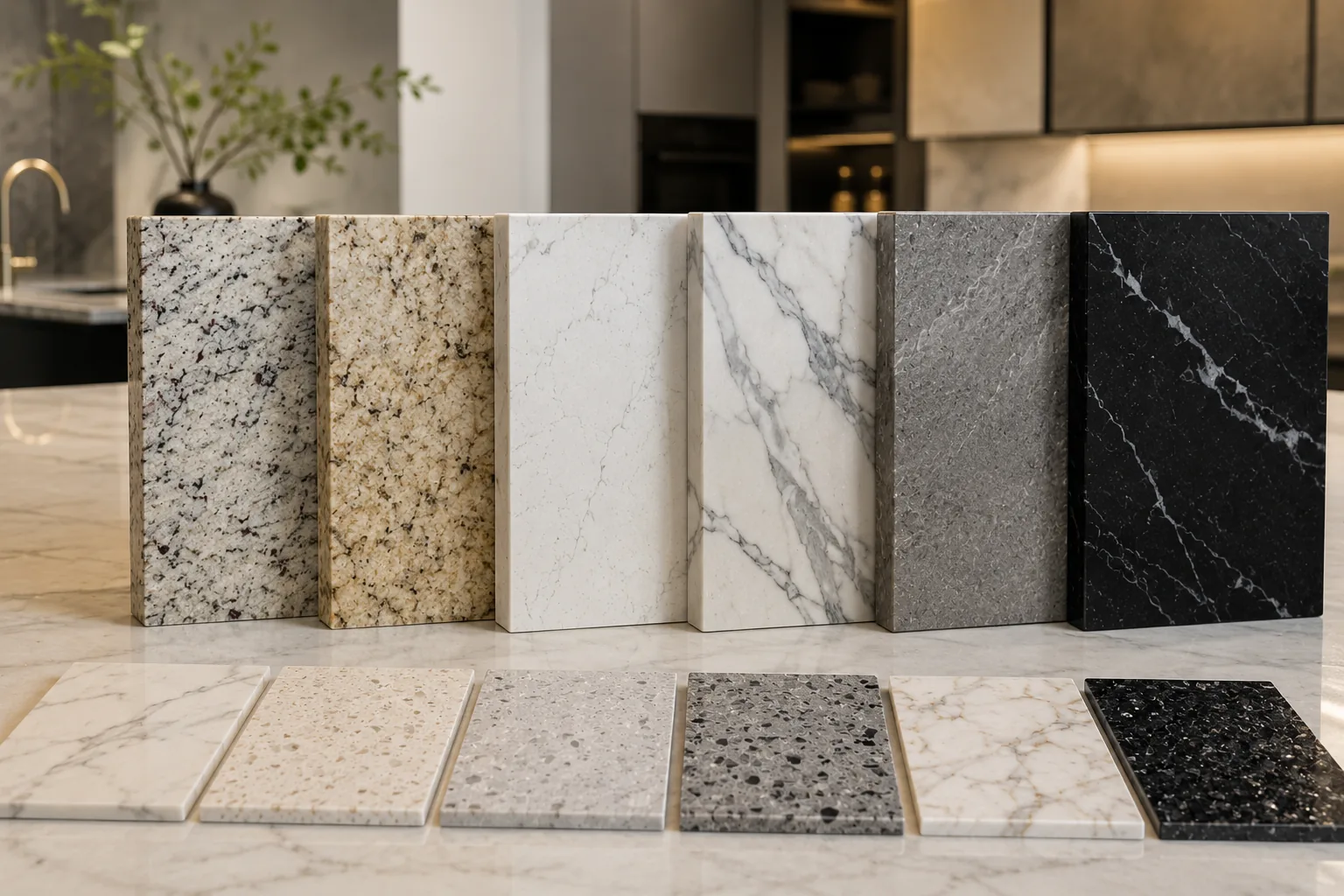
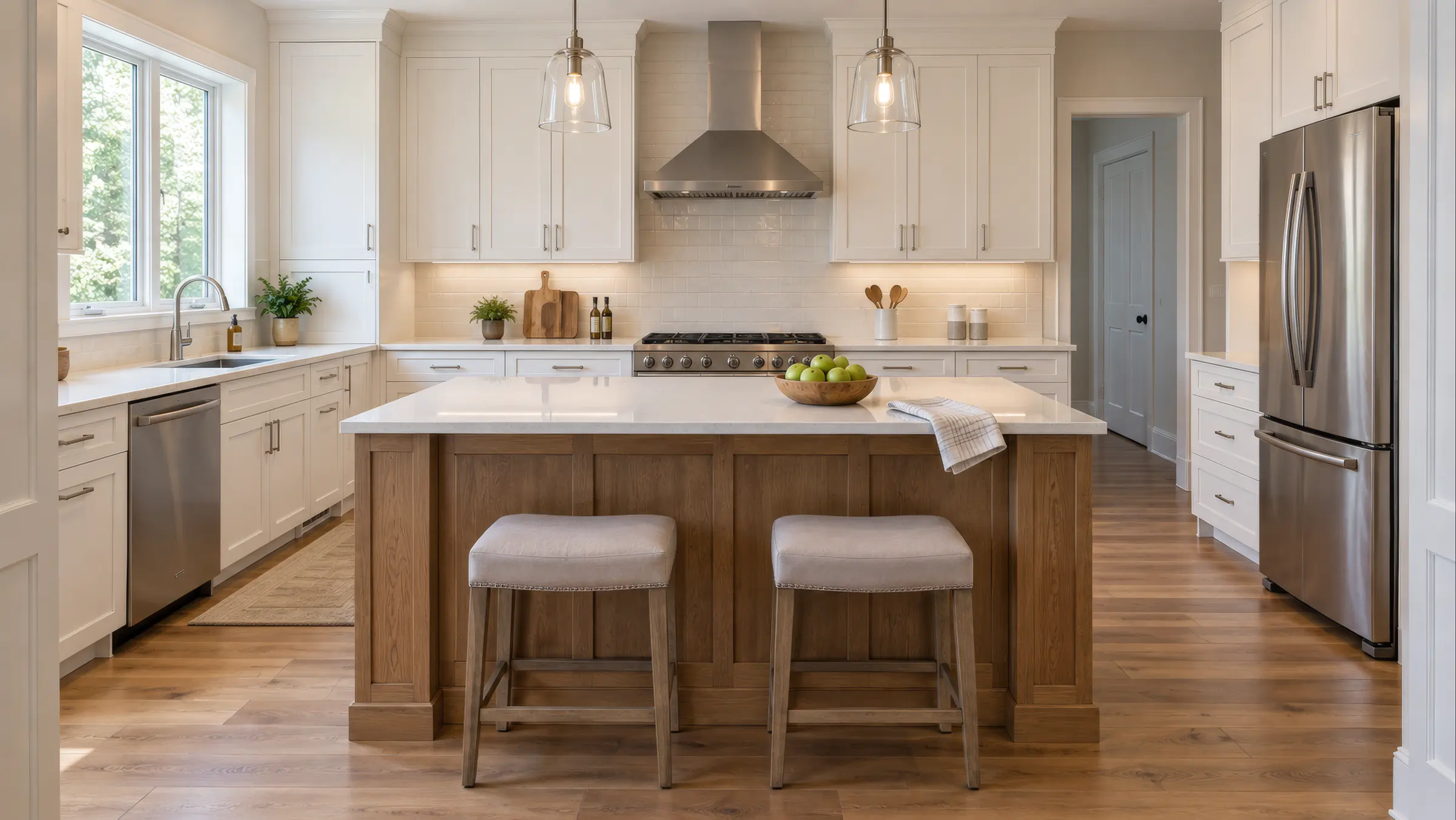
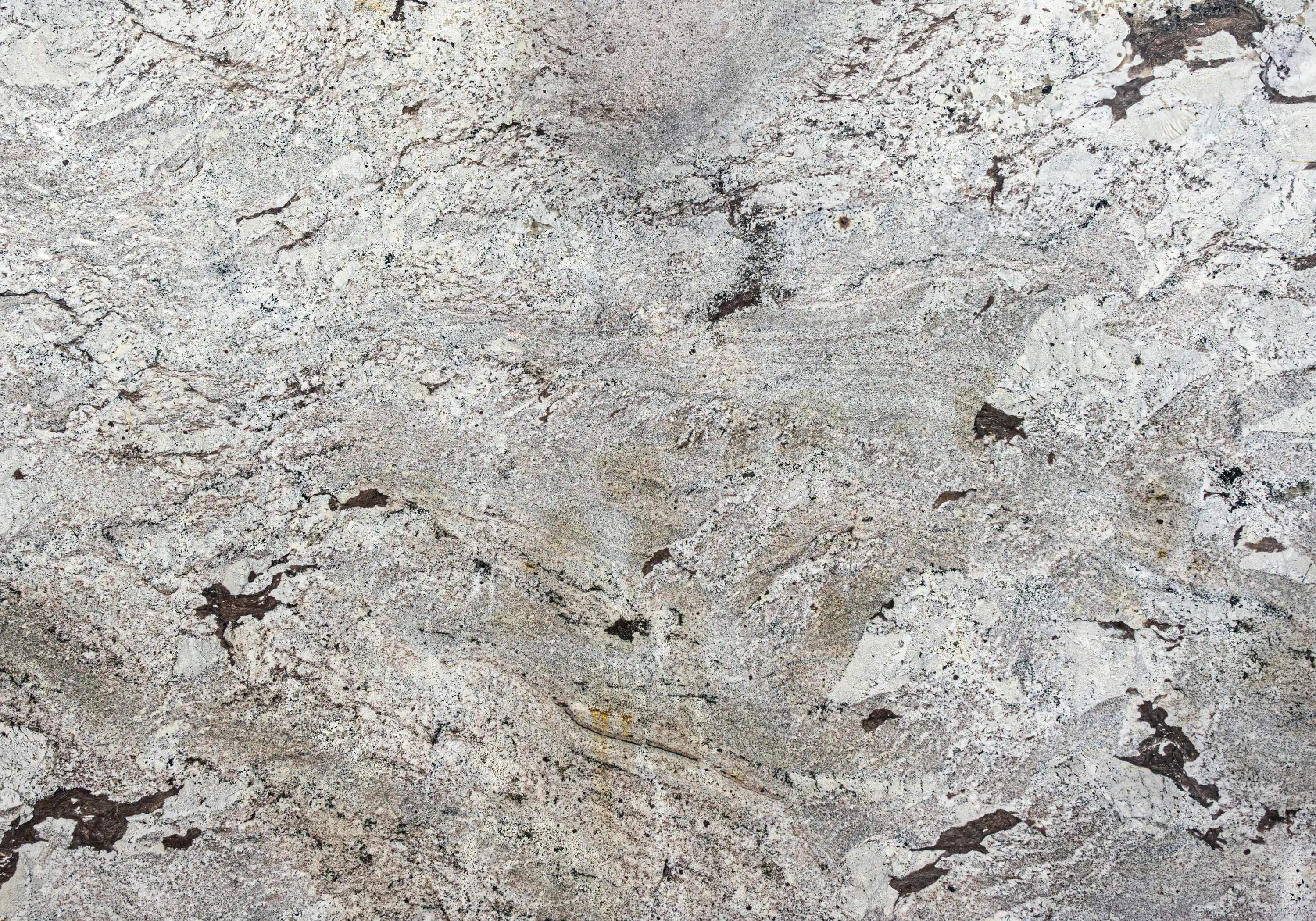
Quartzite or marble for a showpiece kitchen island?
Pick quartzite if the island is where you cook, eat and entertain, and you want a veined look that won’t etch. Pick marble if you love how it ages and can live with dull spots where acids land. Either way, test the slab first: true quartzite scratches glass, and marble doesn’t.
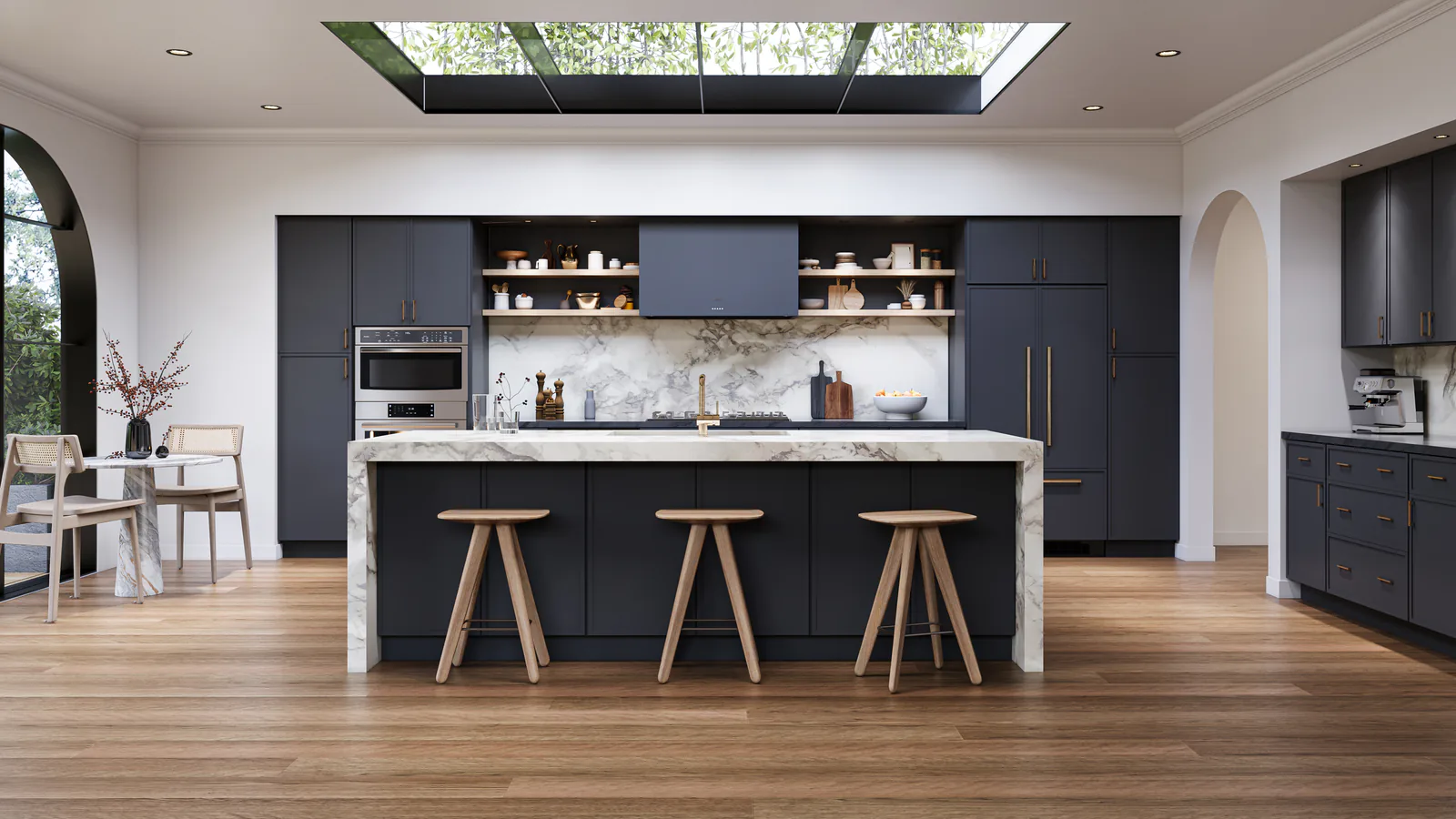
Why is the choice harder on an island?
An island is the counter everyone sees from every side. It’s also the one people lean on, eat at and set glasses on, so it takes more wear than a back counter behind the range.
That puts the two stones in a real contest. Both can carry long veins across a big slab. They just wear very differently.
How do quartzite and marble wear?
Quartzite is a metamorphic rock made almost entirely of quartz. According to the Natural Stone Institute, acids like lemon juice and vinegar don’t etch it at all.
Marble is softer, and acids etch it. On an island, that looks like dull rings where a glass of wine or a slice of lemon sat. Some owners like the lived-in look this gives over the years; others notice every mark.
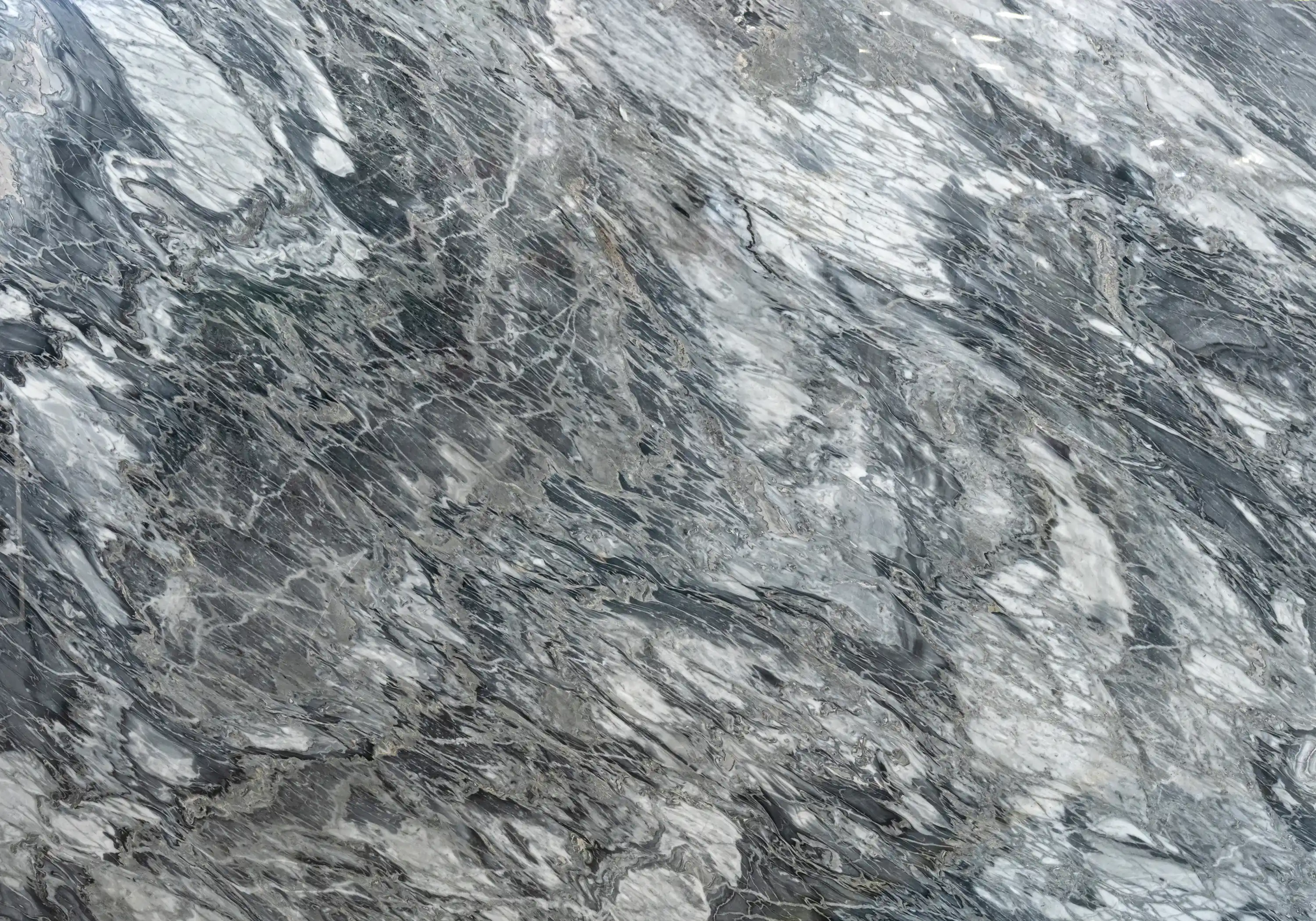
Why do some “quartzites” act like marble?
Because some of them are marble. The Natural Stone Institute says marble and dolomitic marble are sometimes sold as quartzite, and that there is no such thing as “soft quartzite”: real quartzite is hard. If a seller uses that phrase, treat it as a warning.
It happens in real kitchens. On Houzz, a homeowner posted that their new “quartzite” was dulling around water rings and a steel bowl. One reply judged it was probably marble and pointed them to the Natural Stone Institute’s tests.
How can you test a slab before it’s cut?
- Get a piece: ask for an offcut or sample of the exact slab you’re buying, not just the same name.
- Find an edge: pick a rough, pointed corner of the stone.
- Scratch glass: set a glass tile on a table and press the stone into it hard.
- Read it: true quartzite scratches the glass. Marble won’t.
Our general countertop guide adds an acid test you can run at home and compares all four stones we sell.
What does bookmatching do for an island?
Bookmatching means laying two surfaces side by side so they mirror each other, like the pages of an open book. It works with marble or other patterned stone, and on a large island it makes the seam part of the pattern.
If you want it, choose the slabs as a pair, and look at where the seam will fall before anything is cut. Our 3D drawing puts the island in your room, next to your kitchen cabinets, so the seam can be judged before fabrication.
Can you have both stones?
Yes. One way is quartzite on the island, where you prep and eat, and marble in the bathroom, where there’s far less food and drink around. Several of our vanities are listed with a Carrara marble top, including the white marble vanity and natural wood shelf vanity. Call (708) 449-4055 to confirm exactly what comes with the vanity you pick.
Sources
- Natural Stone Institute, What Is Quartzite? (opens in a new tab)
- Houzz, “Help! My new quartzite countertop is etching from WATER!” discussion (opens in a new tab)
- Wikipedia, Bookmatching (opens in a new tab)
- Village of Burr Ridge, Building Ordinance #1225 (PDF) (opens in a new tab)
- ICC, 2021 International Residential Code, R105.2 Work exempt from permit (opens in a new tab)