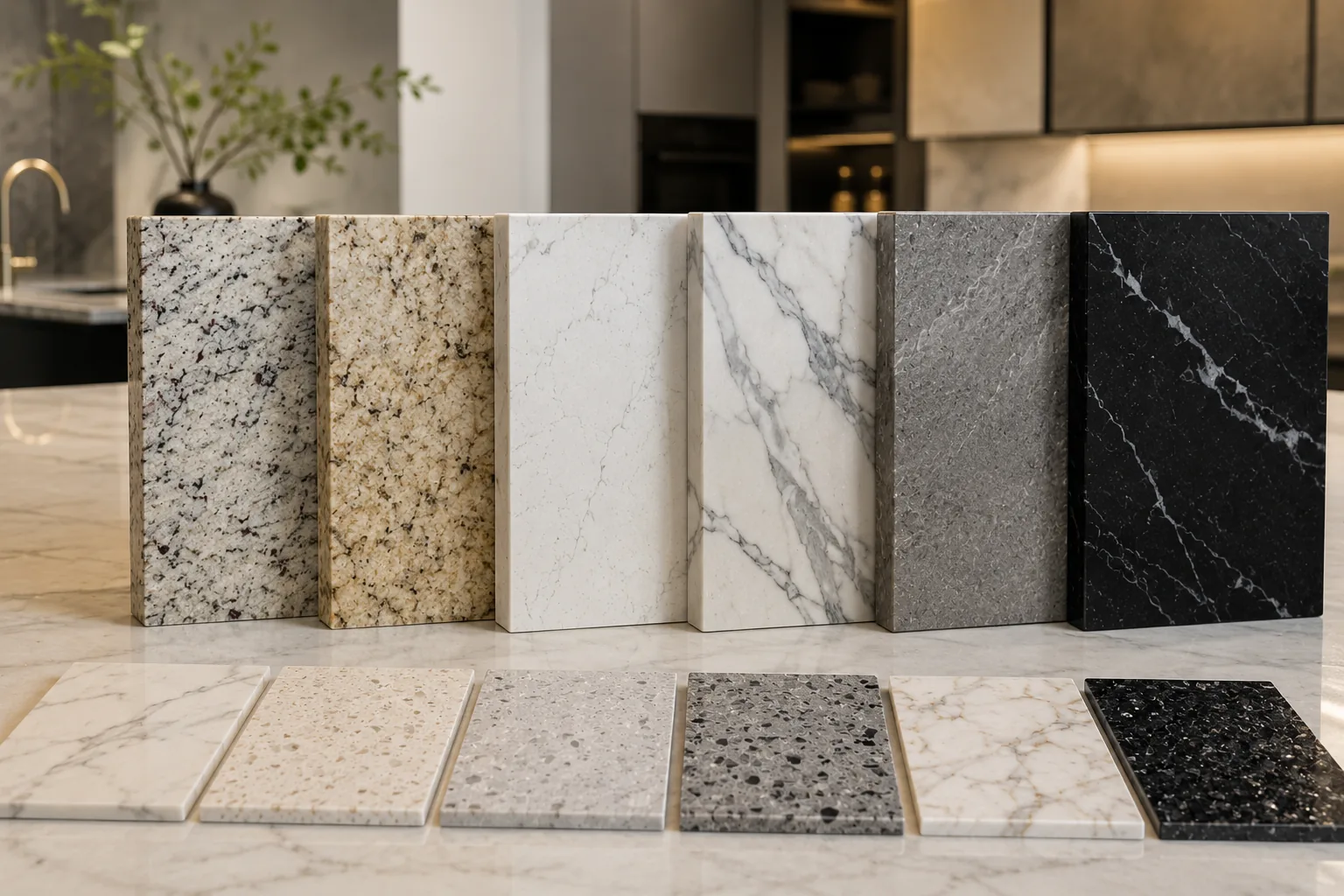
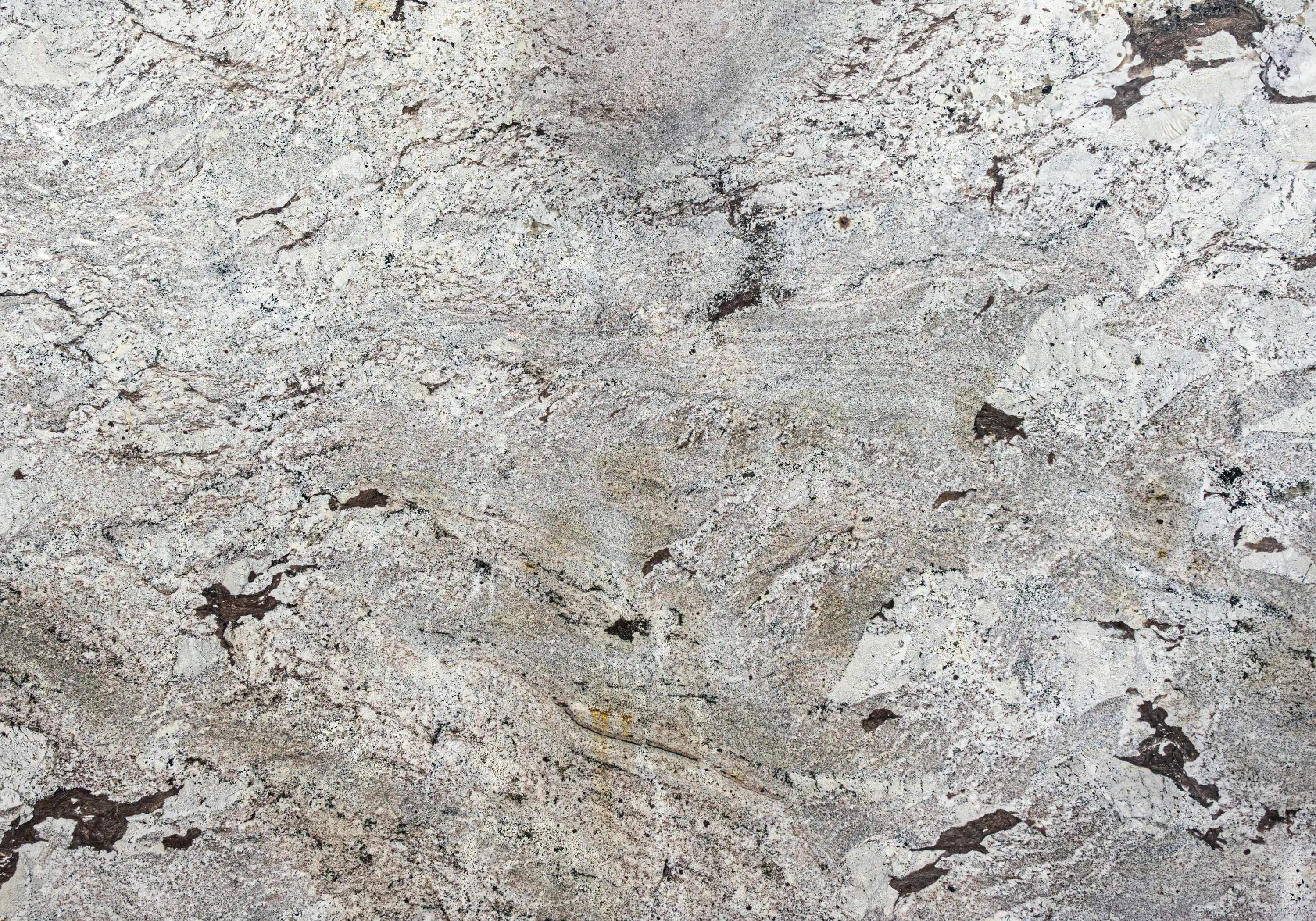
Quartz or granite: which countertop holds up better in a busy family kitchen?
Quartz asks less of a busy family: it’s nonporous, doesn’t need sealing and looks the same from slab to slab, but hot pans can damage it. Granite takes heat better and no two slabs look alike, but it can absorb spills until it’s sealed. If you won’t use trivets every time, lean granite; if spills worry you more, lean quartz.

Why does a family kitchen change the answer?
A family kitchen is hard on a counter: juice at breakfast, markers after school, a pot straight off the burner at dinner, and somebody wiping it all down with whatever spray is under the sink.
In La Grange, that’s a lot of people at one counter. CMAP’s community data snapshot puts the village’s average household size at 2.7 people, a little above Cook County as a whole. More people means more meals, more spills and more hands on the island.
What happens at breakfast when juice or coffee spills?
A quartz counter is engineered, made of crushed quartz held together with resin. The slab is nonporous, so a spill sits on top until you wipe it. No sealing, no testing.
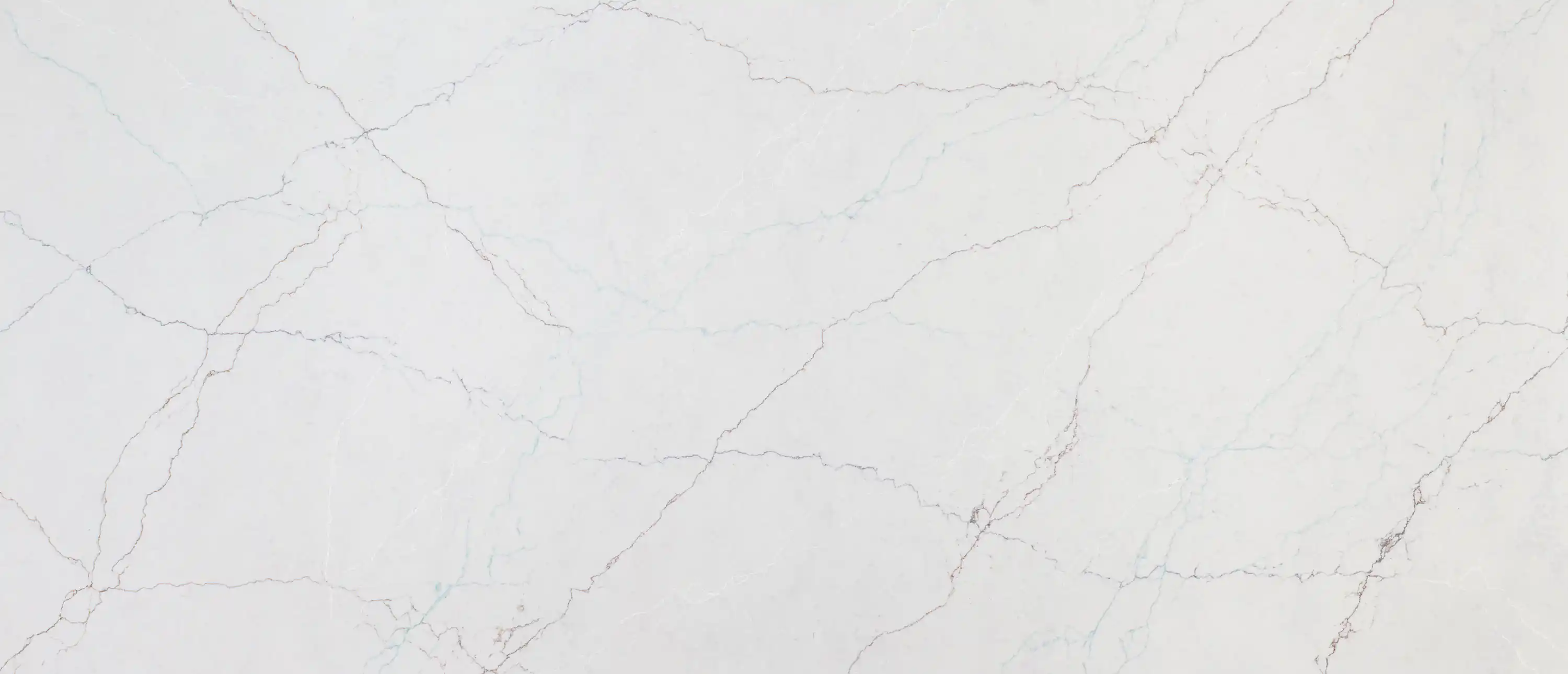
Granite is natural stone, and how much it absorbs depends on the slab and whether it’s sealed. The Natural Stone Institute’s advice for any stone spill is to blot it with a paper towel right away instead of wiping, which spreads it, then rinse with water and mild soap. It also suggests coasters under glasses, especially citrus juice.
Can the island double as a homework and art table?
On the Houzz thread “Granite with kids” (opens in a new tab), a parent of three small children asks whether granite will hold up to crayons, markers and paint on the peninsula where the kids do homework.
Either stone can take everyday homework. Engineered stone is harder than many natural stones, and geologists describe granite as hard enough to resist abrasion. The bigger risks are liquids and grit:
- Put a mat or an old placemat under paint, glue and markers, on either counter.
- Wipe up spilled water cups quickly, especially on granite that hasn’t been sealed lately.
- Skip scouring powders when you clean up; the Natural Stone Institute warns their abrasives can scratch some stones.
What about hot pans at dinner?
This is where granite pulls ahead. Quartz countertops are less heat resistant than most granite. A hot pan set straight on the surface, or a sudden swing in temperature, can damage it, and quartz makers say never to put hot pots and pans directly on the counter.
Granite handles heat better, but it isn’t an excuse to skip the trivet. The Natural Stone Institute still recommends trivets or mats on stone, and the institute’s consumer site suggests cooling racks and cutting boards for granite too.
Be honest about your household here. If the person who cooks most grabs a trivet every time, quartz is fine. If pans land wherever there’s room, granite is the safer bet.
Which one is easier to clean every day?
Both clean up with a soft cloth and a gentle cleaner. For natural stone, the Natural Stone Institute recommends a neutral cleaner, stone soap or a mild dishwashing liquid with warm water, and warns that too much soap can leave streaks. For quartz, follow the care guide from the maker of your slab.
The difference is upkeep over the years. Quartz never needs sealing. Granite may need it now and then, depending on the stone, and the hot-water test above tells you when.
How do you choose for your household?
- Lean quartz if spills and stains worry you more than heat, and you want no sealing at all.
- Lean quartz if the counters come in several pieces, like an L-shape plus an island, and you want every piece to match; engineered stone is consistent from slab to slab.
- Lean granite if hot pans tend to land on the counter, or if you like a stone no one else has.
- Either way, keep trivets and cutting boards within reach of the stove.
Still weighing marble and quartzite too? Our guide to all four countertop materials compares them.
Sources
- Wikipedia, Engineered stone (opens in a new tab)
- Geology.com, Granite (opens in a new tab)
- Natural Stone Institute, Care and cleaning of natural stone (opens in a new tab)
- Use Natural Stone (Natural Stone Institute), How to care for your granite countertops (opens in a new tab)
- Houzz, “Granite with kids” discussion (opens in a new tab)
- CMAP, Community Data Snapshot: La Grange (June 2026) (opens in a new tab)