Do painted kitchen cabinets crack in winter? What La Grange Park buyers should know
Painted kitchen cabinets in La Grange Park can show a hairline crack where a door’s frame pieces meet once the furnace runs. Heated winter air is dry, the wood shrinks a little across its grain, and the stiff paint film splits at the joint. The door isn’t failing. Steady indoor humidity keeps the lines small.
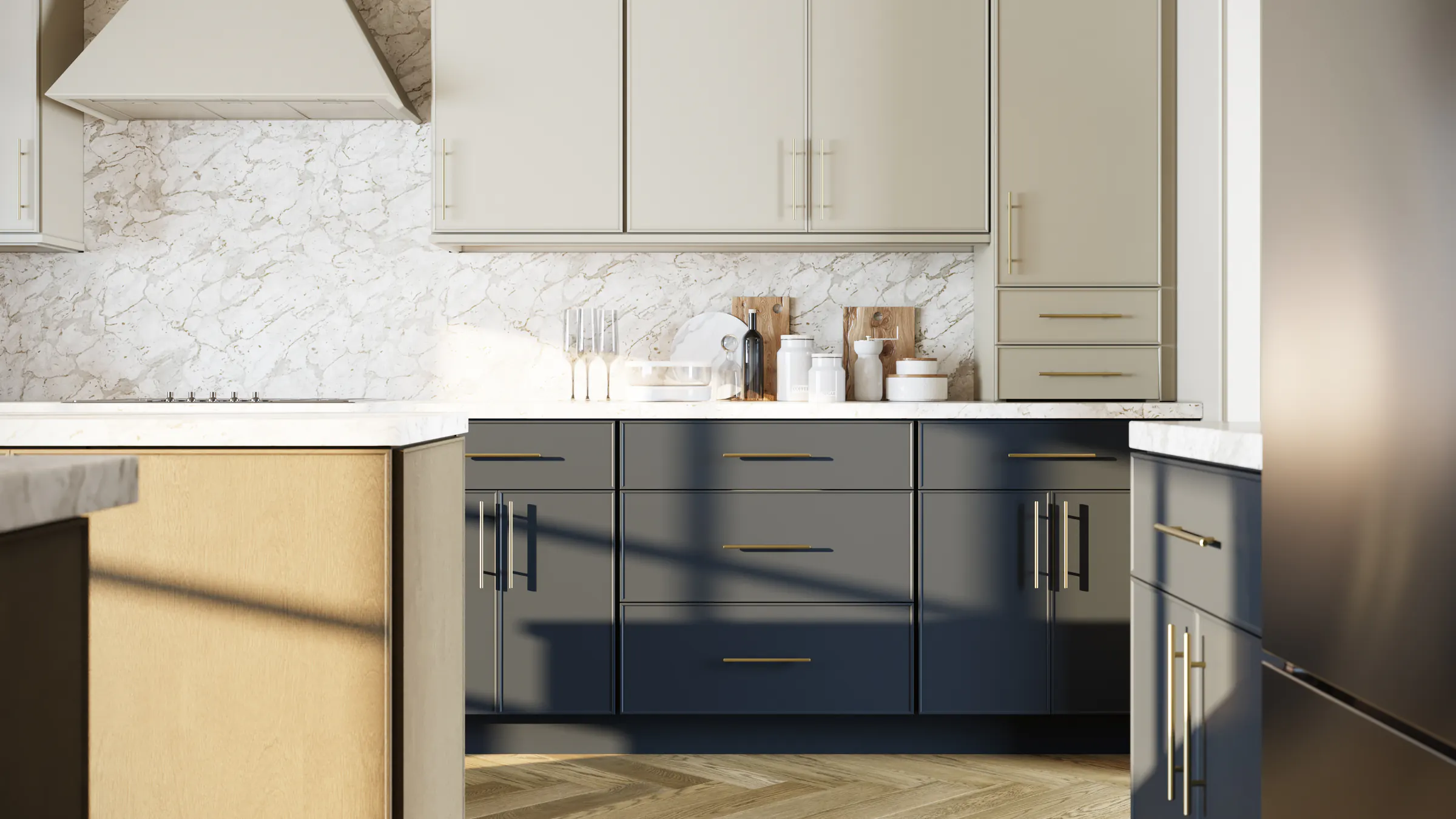
Why do painted cabinet doors crack at the joints in winter?
Wood gives up moisture to dry air and shrinks, and paint can’t stretch to follow it. The Center for Energy and Environment, writing about Minnesota winters, says dry winter air gets into houses, lowers indoor humidity and can cause the shrinking of wood doors and furniture.
A shaker door is a frame and a panel. Wikipedia’s frame and panel article calls the upright frame pieces stiles and the cross pieces rails. The center panel usually isn’t glued: it floats in a groove so the wood can move with the seasons without pulling the frame apart. The article says wood moves across the grain, and that a wide solid wood panel could change width by half an inch.
On a stained door those small moves are hard to see. On a painted door, one continuous film covers the stile, the rail and the seam between them. When the rail shrinks a hair, the film over that seam splits in a straight, thin line. The Old Town Home blog, a house restoration journal, describes the same thing on their painted woodwork: hairline cracks in painted joints and separations in door panels, caused by the wood shrinking as it loses moisture.
When does the dry season start in La Grange Park?
Right about now. The National Weather Service’s 1991 to 2020 normals for Chicago O’Hare put October’s average temperature at 54.0°F, November’s at 41.3°F, December’s at 30.5°F and January’s at 25.2°F, with a normal January low of 18.8°F.
Heating the air dries it. FGIA, the window and door industry group, explains that warmer air can hold more moisture than cooler air. Cold outdoor air that leaks in and gets warmed to room temperature carries the same small amount of water, so its relative humidity drops. C.H. Becksvoort, a furniture maker writing for Northern Woodlands, puts the timing plainly: a few weeks after the heat comes on, the doors in our houses start to shrink.
So the lines tend to show up in late fall or early winter, after the heat has run for a while. The same wood expands again as the air turns humid in summer.
What indoor humidity is best for wood cabinets in winter?
Steady and moderate, within the limit your windows allow. The EPA’s mold guide says to keep indoor humidity below 60 percent, ideally 30 to 50 percent. In a cold snap, the window becomes the limit. The Center for Energy and Environment and FGIA both publish the same ceiling by outdoor temperature, with the house at 70°F:
| Outdoor temperature | Keep indoor humidity |
|---|---|
| 20°F to 40°F | below 40 percent |
| 10°F to 20°F | below 35 percent |
| 0°F to 10°F | below 30 percent |
A normal January night near O’Hare, at 18.8°F, lands in the middle row. The Center for Energy and Environment suggests a humidifier kept to 30 to 40 percent, and says moisture building up on your windows or walls means there’s too much in the air. Turn it down when the glass fogs.
- Buy a small humidity meter. The EPA guide notes they are sold at many hardware stores.
- Set it on the kitchen counter, away from the range and the sink, and read it for a week once the heat is on.
- If it reads in the 20s, a humidifier can bring the room up. Watch the windows each cold morning and back off if they bead.
Are some cabinet doors less likely to show cracks?
Yes. The door’s build and its finish both matter, and you can ask about both before you order.
| Door | Chance of a visible joint line |
|---|---|
| Painted shaker, solid wood frame and panel | Most likely. The seam between every frame piece and the panel edge is under one coat of paint. |
| Painted shaker, MDF center panel | Less panel movement. Wikipedia’s MDF article says it expands and contracts less than natural wood and has no knots or rings. The frame joints can still show a line. |
| Painted flat slab | No frame seams on the face, so no joint lines there. Ask what the slab is made of. |
| Stained or wood-tone shaker | The same movement, but the joint already reads as part of the wood, so a hairline is hard to spot. |
Wikipedia’s frame and panel article notes that MDF panels are painted to hide their surface, while veneered plywood panels are stained to match solid wood rails and stiles. Our black and light oak shaker doors are solid birch with MDF, as the kitchen cabinets page lists for each door.
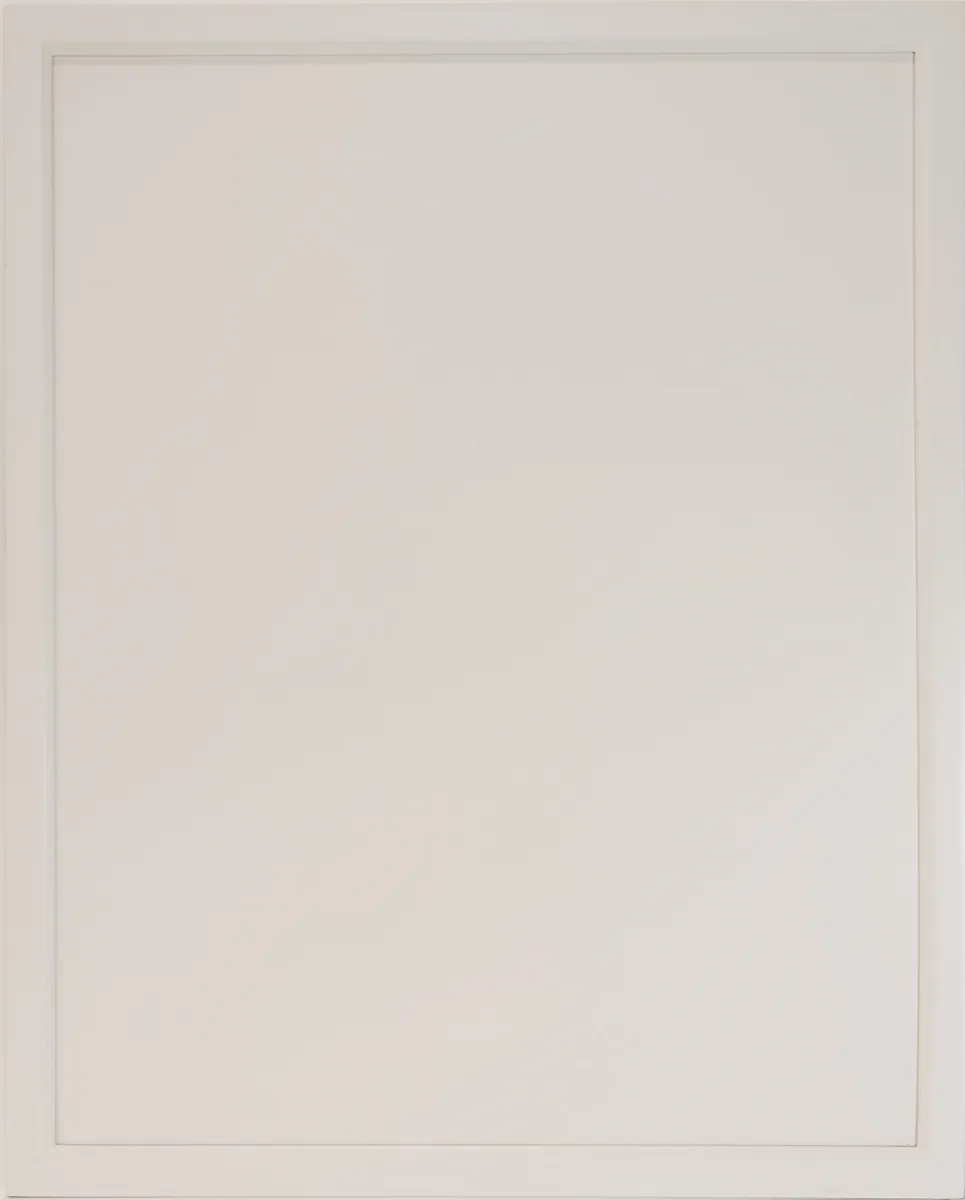
If a hairline would bother you every January, a wood tone or a slab door is the calmer choice. Our guide to choosing between shaker and slab doors covers how each style looks in a room, and the door lab switches one door between shaker, slim shaker and slab, and repaints the shaker in painted and wood finishes.
Can you fix a hairline crack in painted cabinets?
Often you can leave it, since the line is in the paint and not in the door. If it bothers you, the Old Town Home writers fixed theirs while the wood was at its smallest: they scraped loose paint with a razor blade, sanded with 150 grit sandpaper and repainted. They note that when the wood shrinks again, the new paint is already there, so the fix holds.
For new cabinets, keep the finish name with your order so touch-up paint can be matched later. Our guide to picking a kitchen cabinet color covers that record and how painted and wood finishes age.
Becksvoort, the furniture maker, paints or finishes each panel before he puts it in the frame, so no bare wood is exposed when the panel shrinks in winter. That’s a good question to ask about any door: is the panel edge finished, or will a pale strip of raw wood show along it in February?
Should you avoid painted cabinets in La Grange Park?
No. Paint gives the most even color from door to door, and a hairline at a joint is a cosmetic line, not a sign the cabinet is coming apart. The floating panel exists so the door can move without the frame cracking.
Choose with the line in mind. Pick paint if you want a clean color and can live with a faint seam in the coldest weeks. Pick a wood tone, a slab face or an MDF panel if you can’t. Then keep the kitchen’s humidity steady through the heating season.
Before you visit, look at the doors you have now on a cold morning, with the heat running, and note where any lines show. Then browse the painted and wood looks in Find your look and bring your favorite. Our list of what to check in a well-built cabinet covers the box and drawers behind the door.
Sources
- National Weather Service Chicago, 1991-2020 monthly normals for Chicago and Rockford (opens in a new tab)
- Center for Energy and Environment, Managing Indoor Humidity Levels All Year Round (opens in a new tab)
- FGIA, Understanding Indoor Condensation (opens in a new tab)
- EPA, A Brief Guide to Mold, Moisture and Your Home (opens in a new tab)
- Wikipedia, Frame and panel (opens in a new tab)
- Wikipedia, Medium-density fibreboard (opens in a new tab)
- Northern Woodlands, The Shrinking Wood of Winter, C.H. Becksvoort (opens in a new tab)
- Old Town Home, Wood Shrinkage Happens: Fixing Unsightly Paint Cracks (opens in a new tab)