Shaker or slab cabinet doors? Choose the detail your kitchen needs
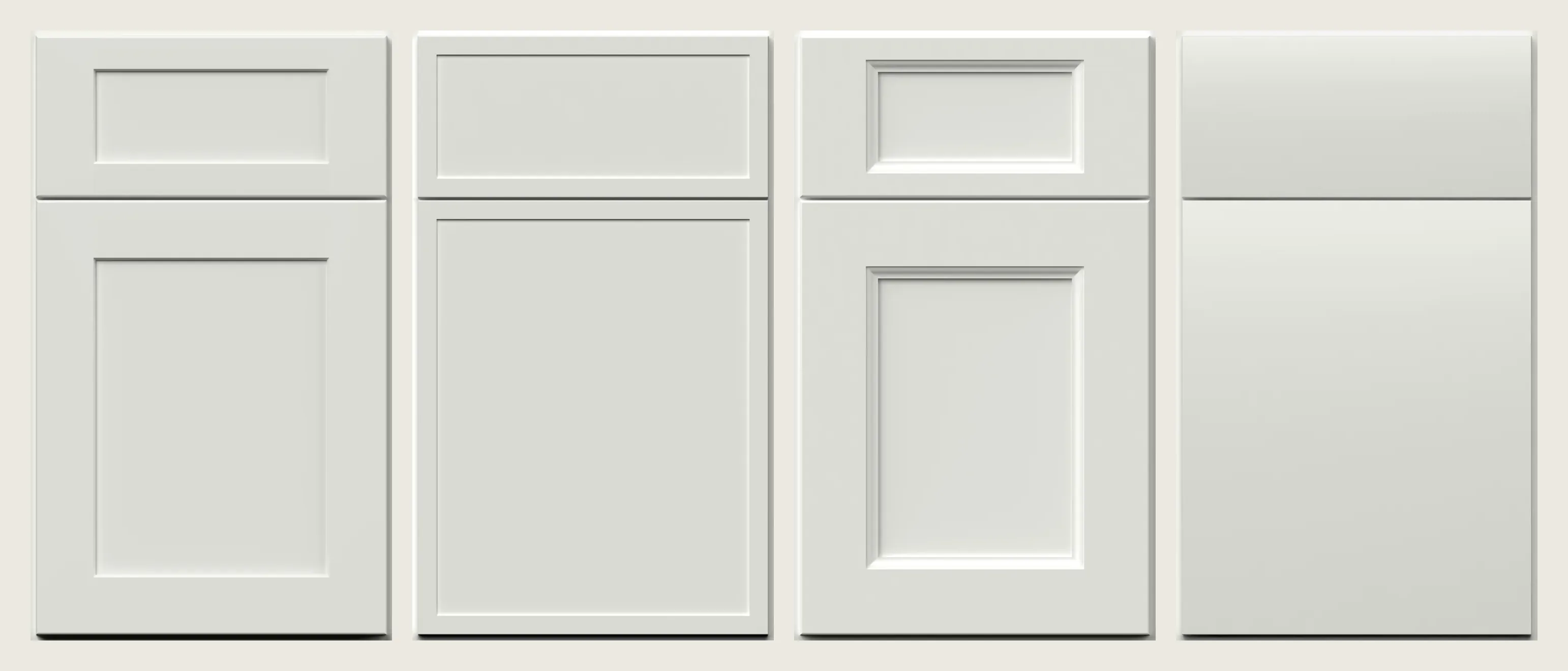
A Shaker door has a frame around a recessed center panel; a slab door has an uninterrupted flat face. Slim Shaker doors make that frame narrower. Choose by the trim, flooring, hardware and amount of detail you want in the room, then confirm the construction and finish options for the door you like.
What is the difference between Shaker and slab?
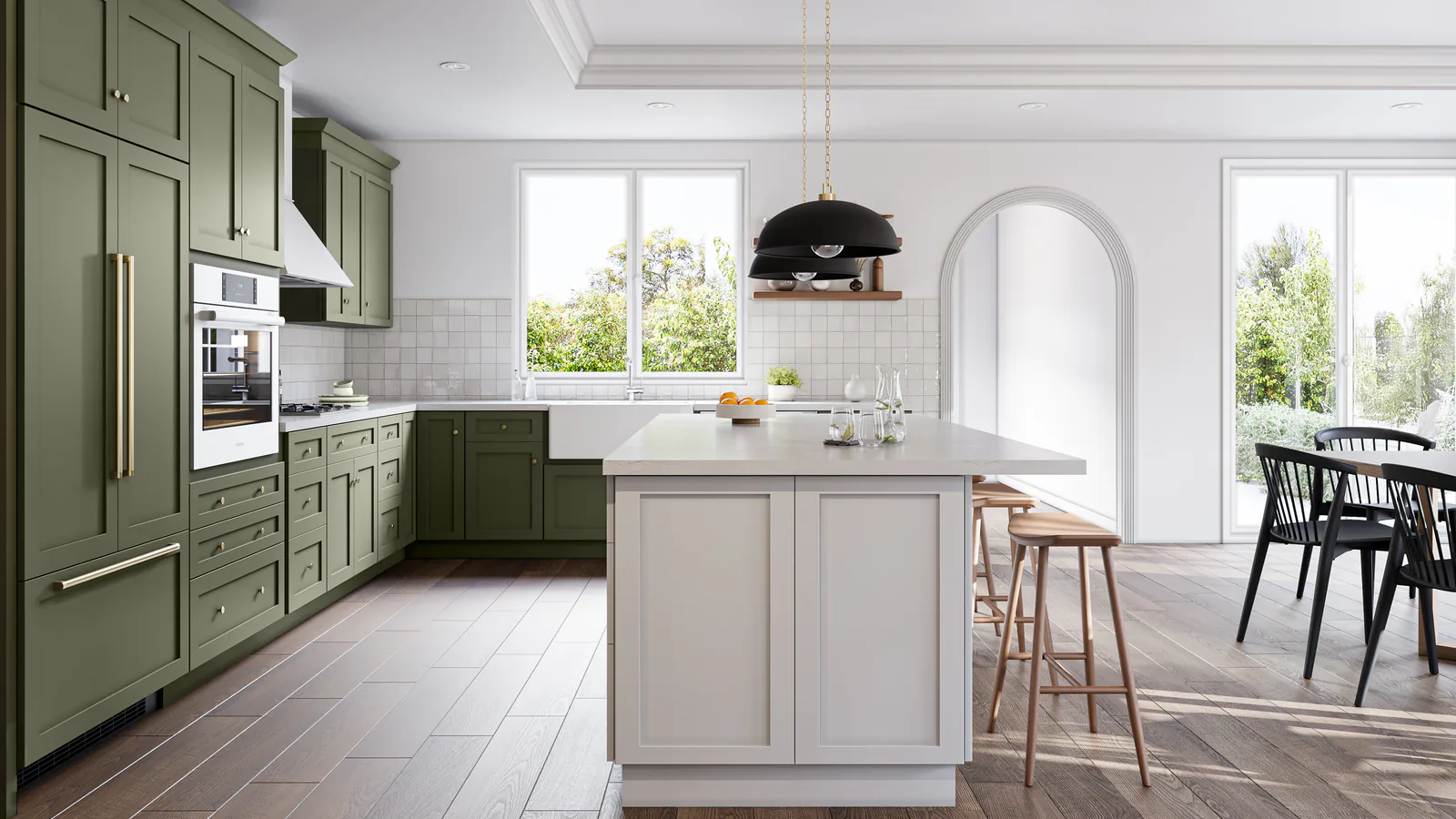
- Shaker: rails and stiles form a frame around a flat, recessed center panel.
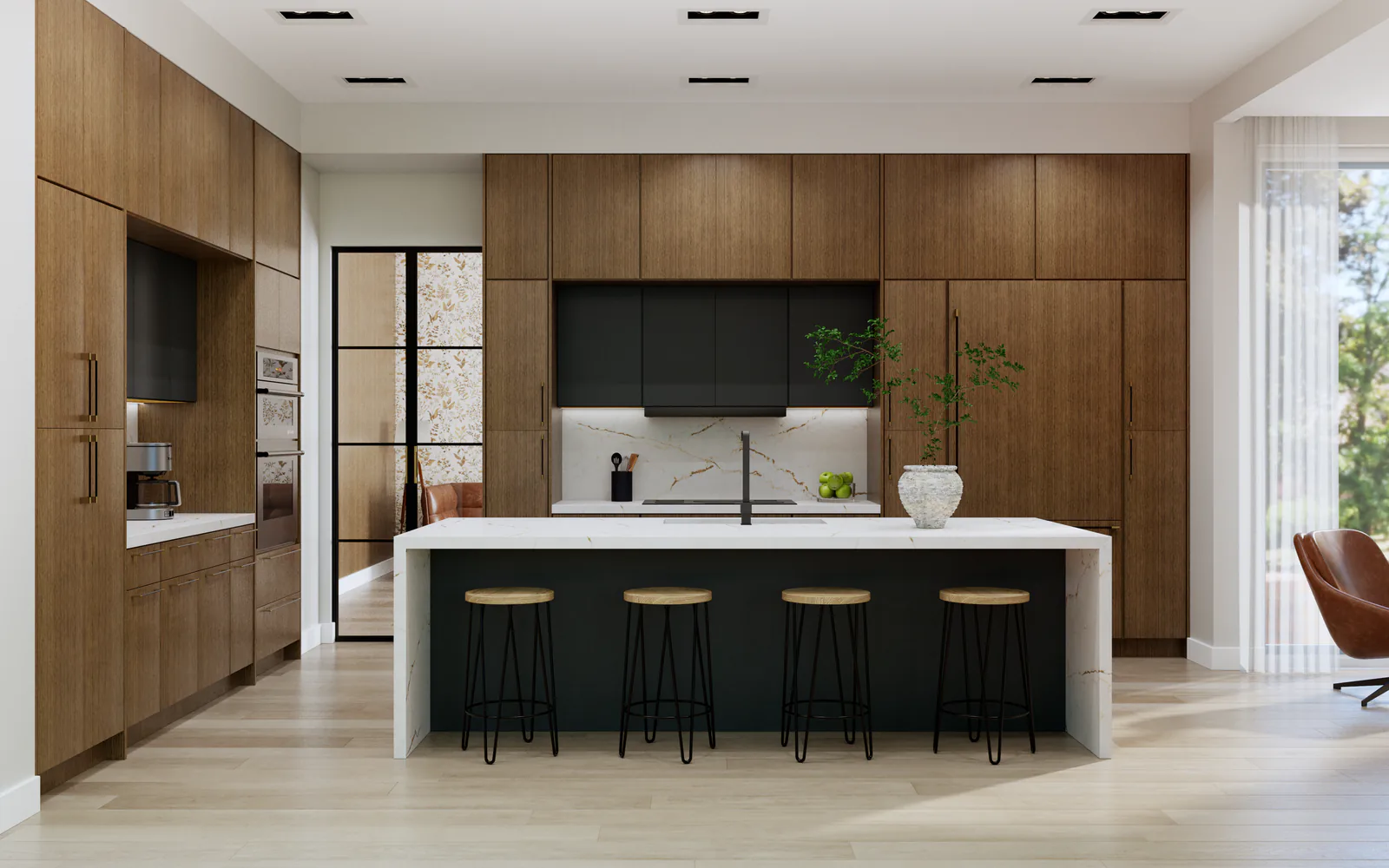
- Slab: a flat face without that frame. Check the material and finish for the specific door.
- Slim Shaker: a narrower frame leaves more of the center panel visible.
The difference is the outline. A Shaker door repeats a rectangle across the kitchen. A slab lets the grain, color and pulls carry more of the look.
The kitchen above is an inspiration image of oak-tone slab doors.
How much frame do you want?
Compare a classic Shaker, a slim Shaker and a slab side by side. A wider frame makes the door pattern more visible; a narrow frame keeps an edge detail with more open panel.
Do not choose from one small door alone. In a whole kitchen, the same outline repeats across the wall and island.
What changes with a slab door?
With no recessed frame, the finish and hardware become the main details. Compare the surface in person, including its sheen and texture.
Ask what the door is made from and how its edges are finished. Two flat doors can look similar in a photograph but use different materials.
What should the door work with?
- Room: look at the interior doors, trim and floor that will stay.
- Hardware: hold a pull against the sample; check the grip as well as the shape.
- Countertop: set the cabinet and stone samples side by side.
- Finish: confirm the colors and surfaces available for your chosen door.
We can put your selected look into a 3D kitchen plan so you can judge the cabinet runs and island together.
Will the style still look good later?
No one can promise what will be fashionable years from now. Choose the door you like using every day and the finish that works with the parts of the house you plan to keep.
If you are undecided, use our inspiration gallery to compare a whole room with each type of door, then look at physical samples.
Replacing cabinets in Indian Head Park?
More than half of Indian Head Park’s homes went up in one stretch: CMAP’s June 2026 community data snapshot dates 55.8 percent of them to 1970 through 1989. If yours is one of them, start from the trim, floors and doors it already has.
Check with the village before work starts, too. On its permits page (opens in a new tab), “Cabinet replacement” appears under projects that don’t need a building permit and “Remodeling” under projects that do. Describe your job and confirm.
Read what to check in cabinet quality for the box and hardware behind the door.