Framed or frameless cabinets? Compare the box behind the door
A framed cabinet has a solid-wood face frame around the front of the box. A frameless cabinet hangs its doors straight on the box, which gives wider openings. HausRack in La Grange Highlands, IL sells both, and every line has a plywood box, so the choice comes down to the look and the storage you want.
What is a framed cabinet?
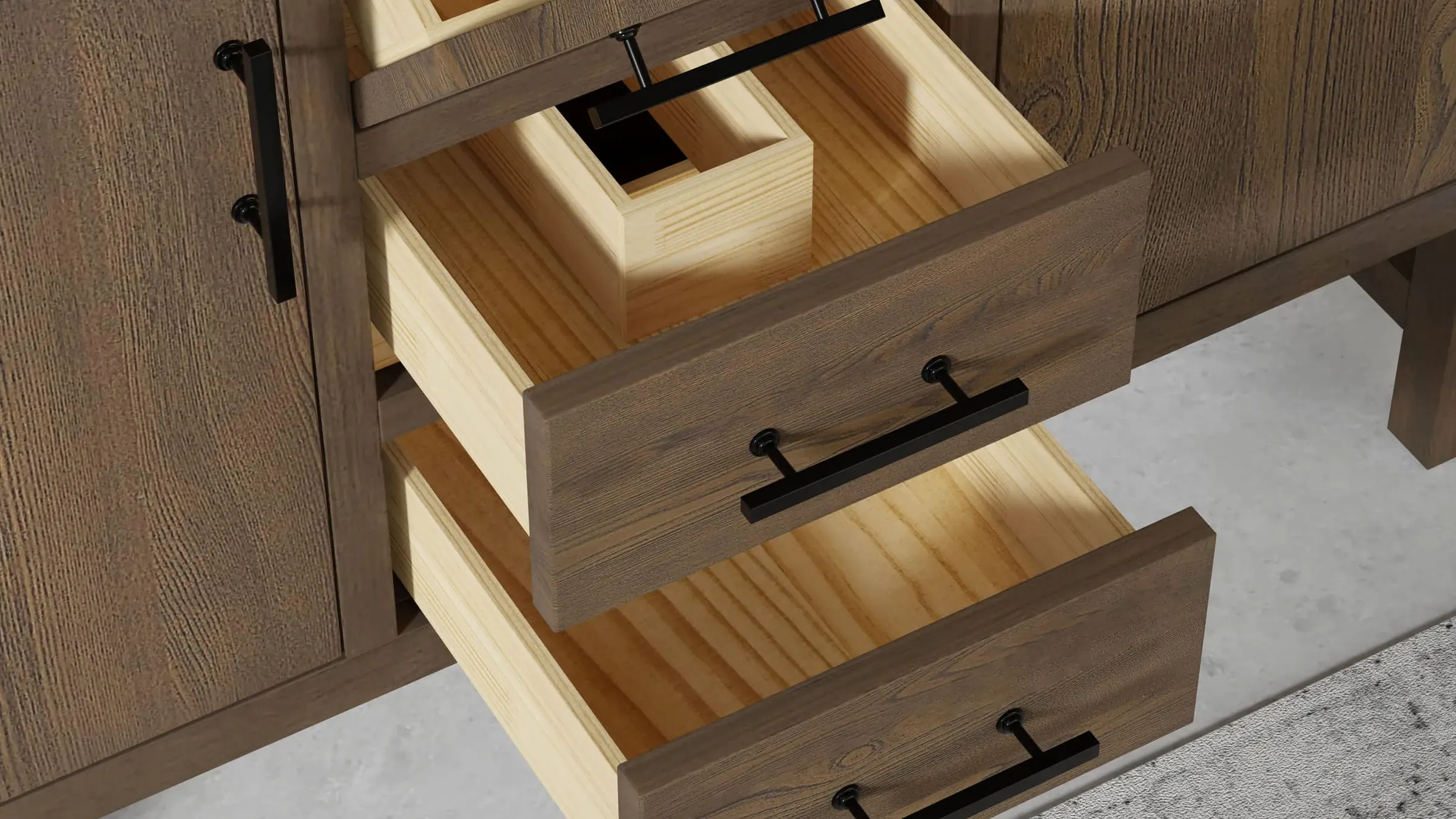
A solid-wood face frame runs around the front opening, and the doors hang on it. The framed line we carry pairs that frame with a plywood box, solid-wood dovetail drawers on soft-close slides and a natural wood veneer inside.
The frame is also what an inset door sits inside, flush with the front. Inset is one of the door styles we can order, next to the shakers and slabs on our kitchen cabinets page.
What is a frameless cabinet?
A frameless cabinet has no face frame. The doors mount to the sides of the box, so the opening runs nearly the full width of the cabinet and the drawers inside can be wider.
We carry three frameless lines:
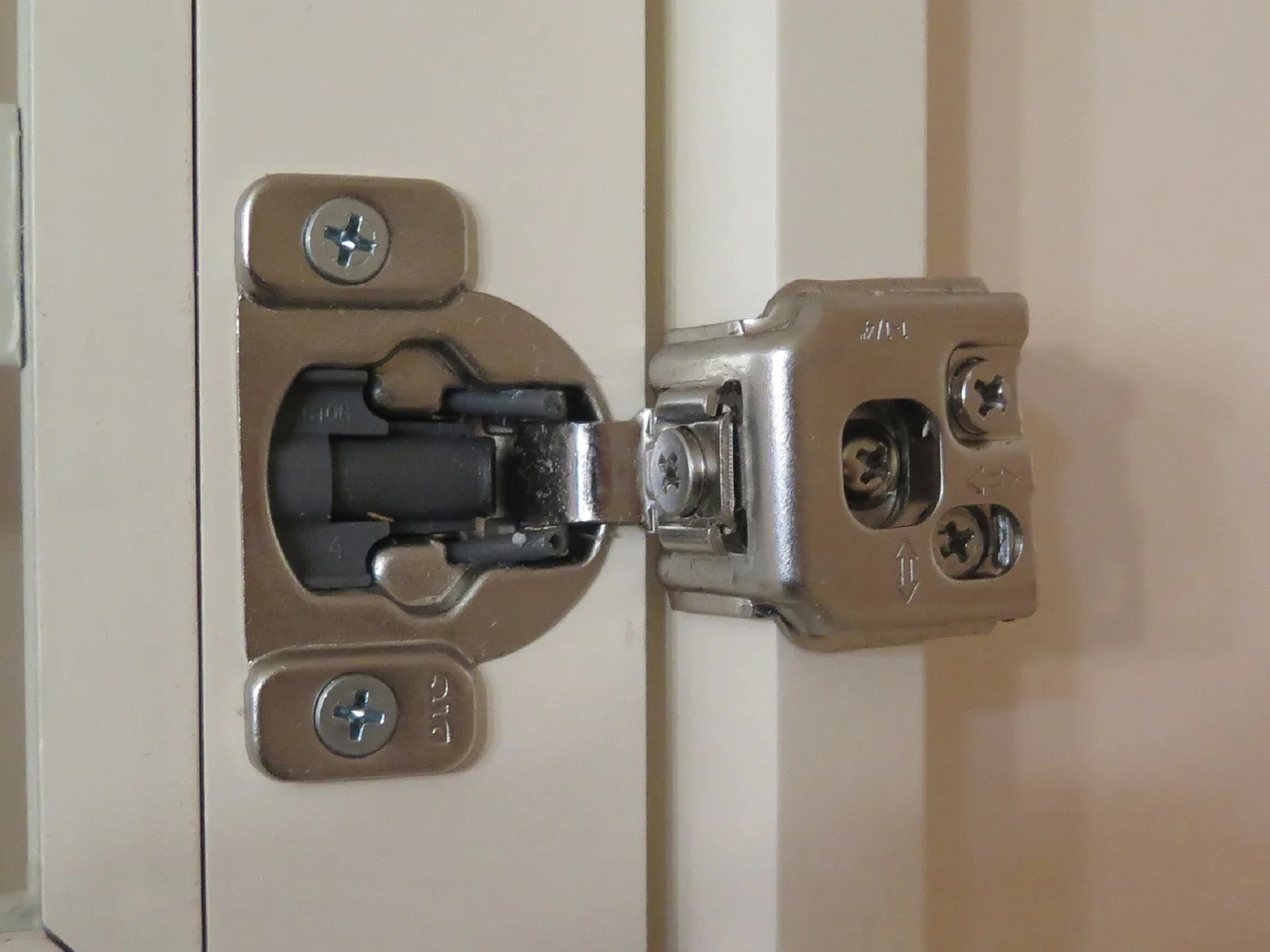
- Black, white and oak shakers: plywood boxes, full-overlay doors, solid-wood dovetail drawers and 3D-adjustable soft-close hinges.
- Plywood frameless: plywood boxes, dovetail drawers and natural wood inside.
- Adjustable legs: a European-style box on adjustable legs, with metal drawer boxes and a white linen finish inside.
Does either type have to look traditional or modern?
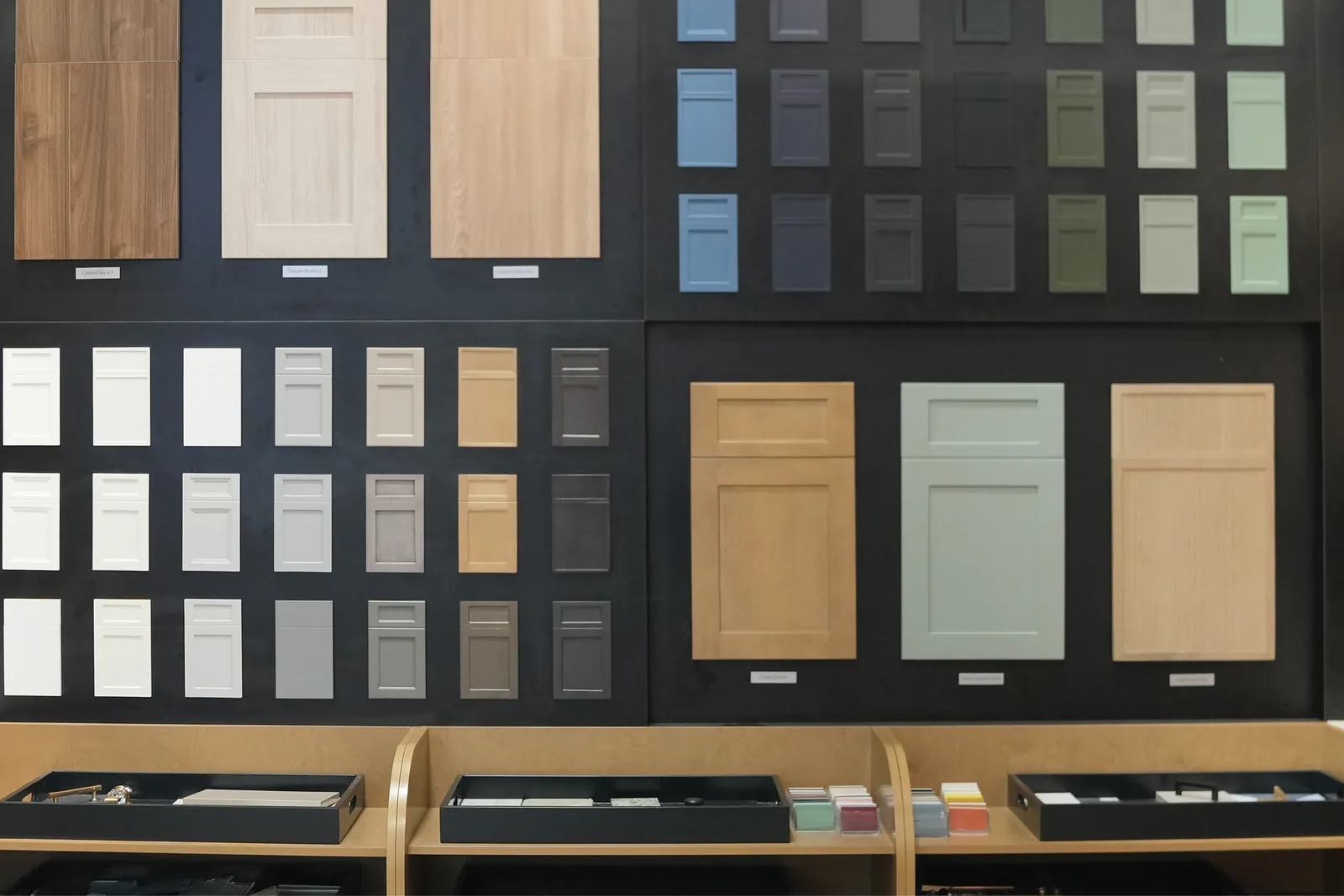
No. The door and finish have a large part in the look. A flat slab door has an uninterrupted face, while a Shaker door puts a frame around a recessed center.
Full-overlay doors can cover most of a framed cabinet front, so two kitchens may look similar with the doors closed even when their cabinets are built differently.
Our door guide and kitchen inspiration can help you narrow the look before comparing the construction.
What should you compare on a quote?
The same parts on every option. Here is how the lines we sell are built:
| Line | Front | Box | Drawers |
|---|---|---|---|
| Wood-frame cabinets | Framed | Plywood, solid-wood face frame | Solid-wood dovetail, soft-close slides |
| Black, white and oak shakers | Frameless | Plywood, full-overlay doors | Solid-wood dovetail, soft-close slides |
| Plywood frameless | Frameless | Plywood | Dovetail, soft-close slides |
| Adjustable legs | Frameless | European-style box on legs | Metal, soft-close slides |
The American-made line we carry has 5/8‑inch solid-wood dovetail drawers on quiet-close, full-extension guides, and quiet-close hinges.
What matters in an awkward kitchen layout?
Measure the walls, windows, doors and appliances before choosing cabinet sizes. A wider opening is useful only if the surrounding doors, drawers and appliances can open too.
For a wall that standard widths don’t fill, the American-made line we carry comes in sizes adjustable in 1/4‑inch steps. With the other lines, a filler strip closes the gap between the last cabinet and the wall.
We draw the layout in 3D so you can see the cabinets and countertops together before you order.
How do you decide?
Pick framed for a solid-wood frame around every opening or an inset door. Pick frameless for the widest openings and a clean edge between doors. Either way you get a plywood box and drawers that close softly.
Read what to check in cabinet quality for a closer look inside.