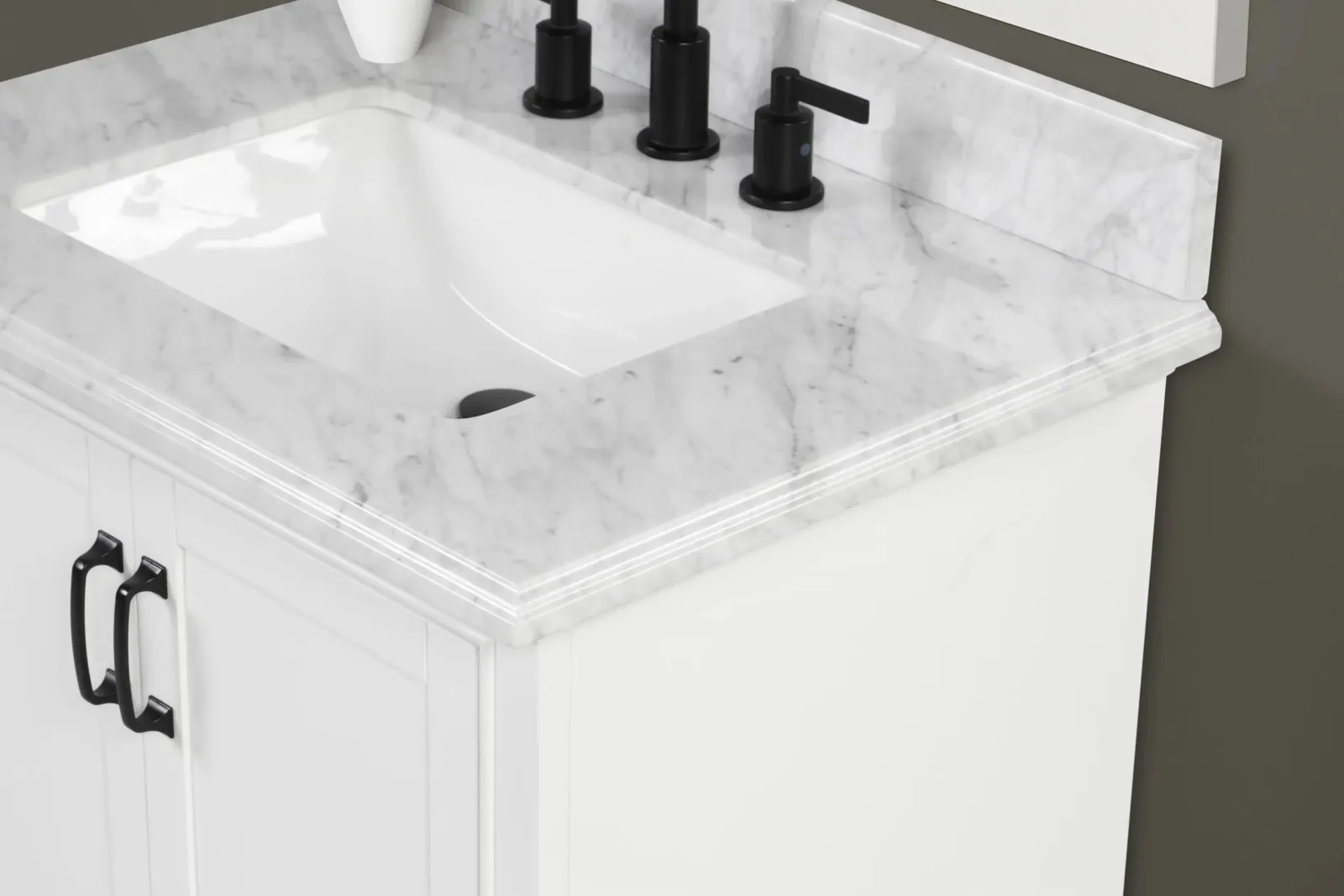
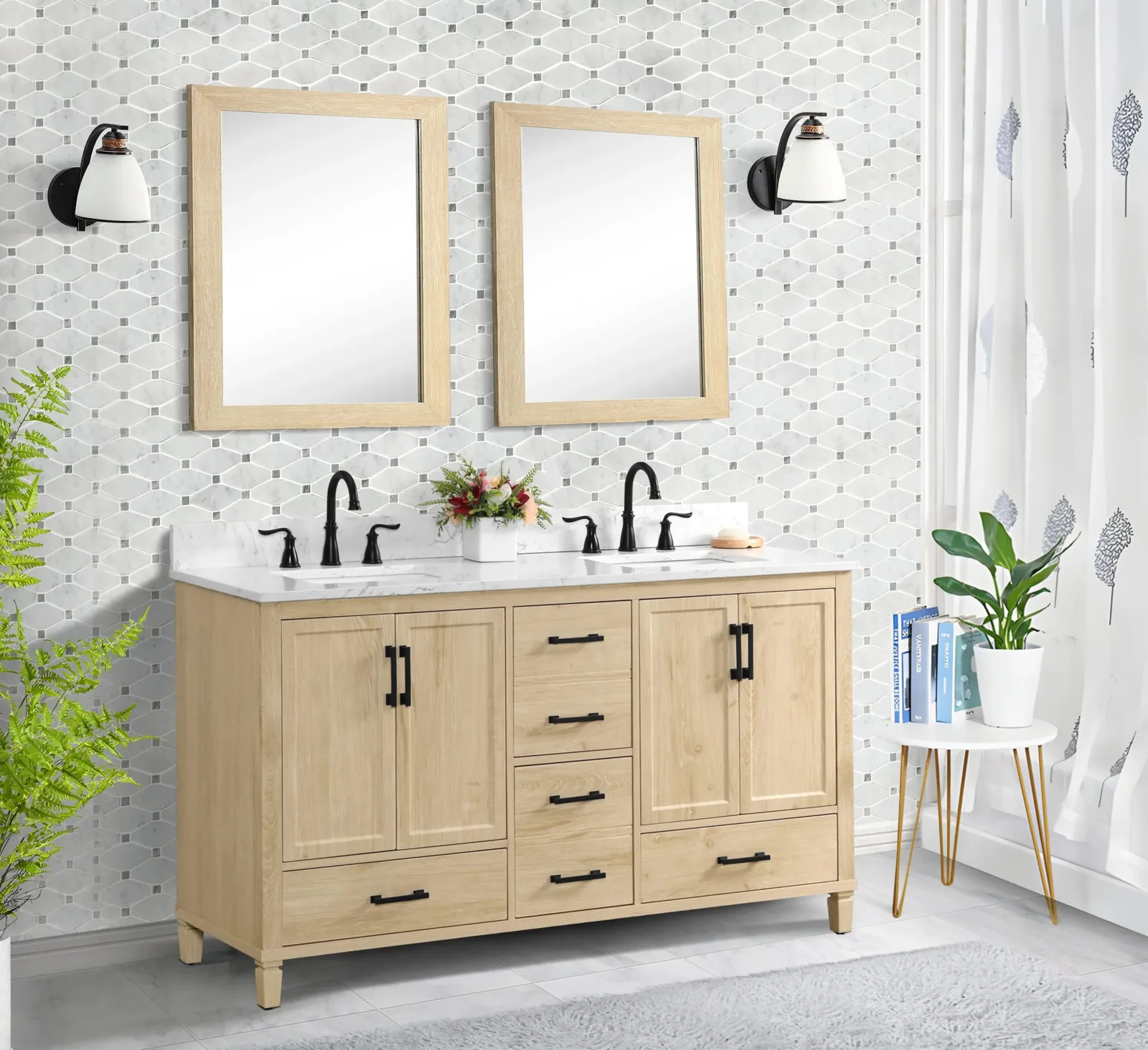
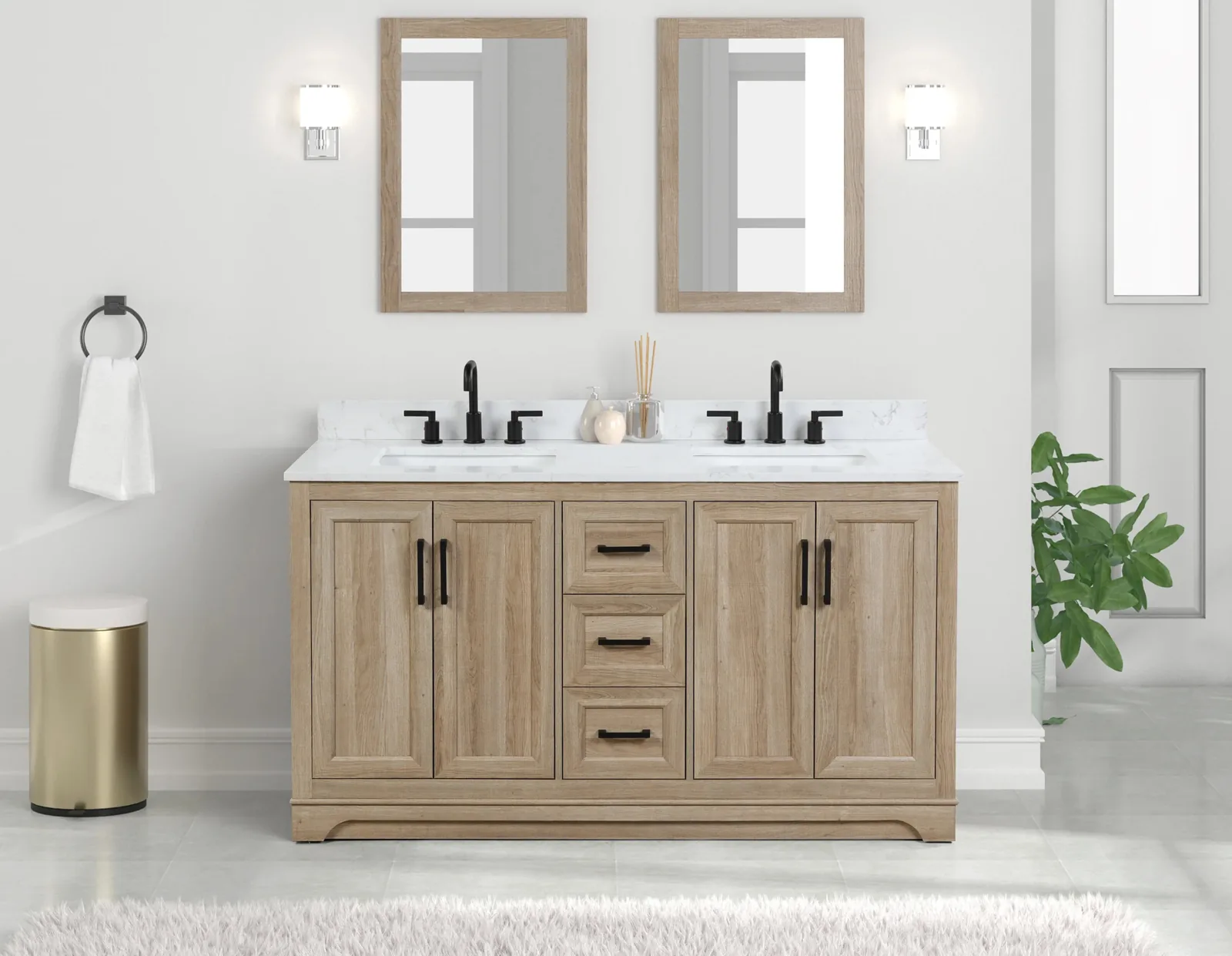
Vanity with a top or base only: what does a bare vanity cabinet leave you to buy?
A base-only vanity is just the cabinet. You still need a top cut to fit it, a sink that matches the cutout, faucet holes drilled for your faucet and a backsplash, often from different sellers. Before you buy any vanity, ask what the price covers. Call (708) 449-4055 to confirm exactly what comes with a HausRack vanity.
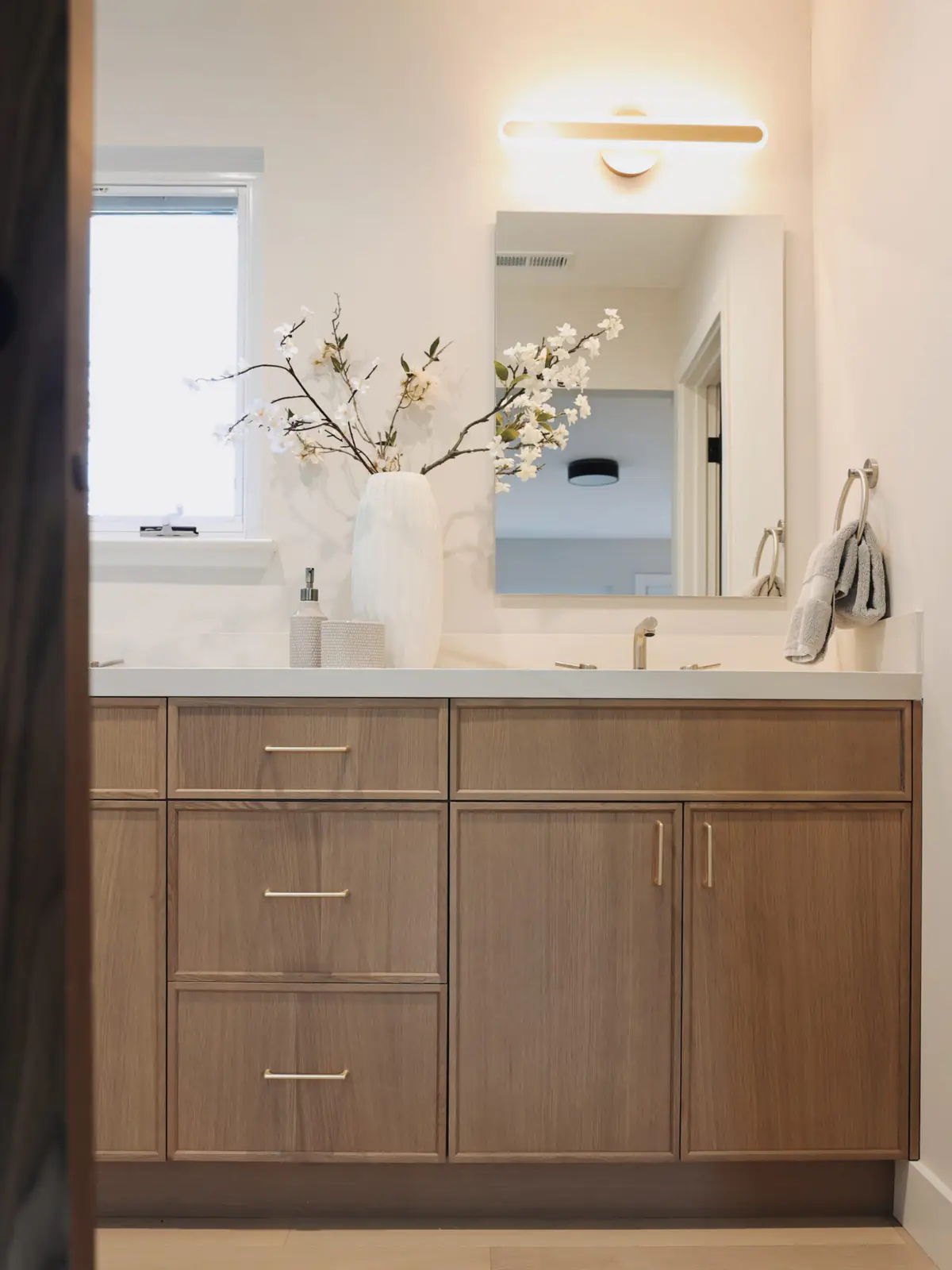
What does “base only” leave out?
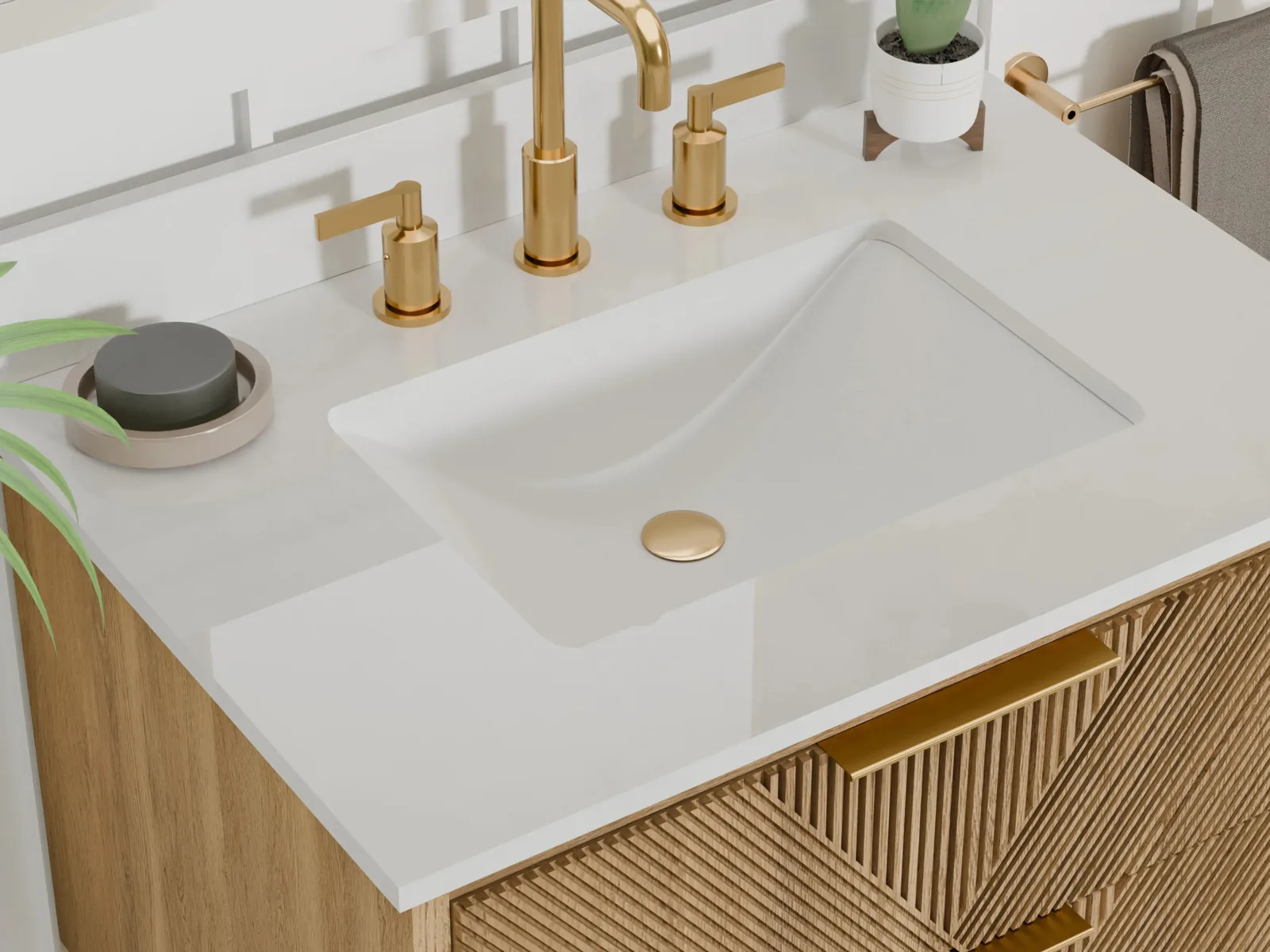
Shop for a vanity and you’ll see “base only” or “without top” listings next to complete sets. The cabinet is the same idea; what differs is everything that sits on it. With a bare base, you source:
- The top: sized to the cabinet with the overhang you want, in stone, quartz or another material.
- The sink: undermount, vessel or drop-in, with a top cut to suit it.
- The faucet holes: drilled in the top for the faucet you picked, one hole or three.
- The backsplash: cut from the same material as the top, or done in tile.
Every piece has to agree with the others. The cutout has to fit the sink, the sink bowl has to clear the drawers under it, and the faucet spout has to reach the middle of the bowl.
When does a base only make sense?
Sometimes it’s the right call:
- Matching stone: you want the vanity top to match a kitchen counter, or a slab you picked out.
- An unusual sink: a vessel bowl, or a shape no set comes with.
- A longer top: one that runs past the cabinet, over a toilet tank or into a corner.
If that’s you, plan the top, sink and faucet together before you order any of them, and have the top measured on the installed cabinet.
For kitchens, we sell countertops in granite, marble, quartz and quartzite and arrange their fabrication; if you want stone in the bathroom to match, ask when you call.
What should you ask about a vanity sold with a top?
Some vanities are sold with a top and sink and some as a bare cabinet, so ask the seller what the price covers. If a top is part of the deal, it settles much of the matching, but only if you check:
- Fit: a top made for that cabinet settles the overhang and the sink cutout.
- Faucet holes: ask how the top is drilled, so you choose a faucet to suit the holes rather than the other way around.
- Size: ask whether the listed width includes the top. The 42‑inch white pull-out vanity, for example, is listed at 43 inches wide overall.
- Backsplash: ask whether one is part of the price, so there’s nothing to hunt down or match.
Ask about the faucet too, plus a drain if the faucet doesn’t come with one. Our guide to what to ask before buying a bathroom vanity has the full list.
What does Brookfield’s bathroom checklist ask around the vanity?
Brookfield lists remodeling a bathroom as work that needs a permit. The village’s Bathroom Remodel Application Checklist (opens in a new tab) has a few lines that land on the vanity wall:
- The drawing: a scaled floor plan with dimensions and fixture clearances, showing every plumbing fixture and electrical outlet.
- Outlets: at least one GFCI wall outlet next to the sink, and every outlet GFCI-protected at 20 amps.
- Water service: an upgrade may be needed if the number of plumbing fixtures goes up, as it would with a second sink.
Two of our options, the white marble vanity and the white pull-out vanity, have power outlets and USB ports inside the cabinet. They need power at the vanity, so tell your electrician the model early.
A straight vanity swap is less clear-cut. Brookfield’s permitting page puts a faucet on existing shutoffs among the jobs with no permit, but says nothing either way about a whole vanity, so ask the village before you order. Our guide to Brookfield’s kitchen checklist covers how its applications work.