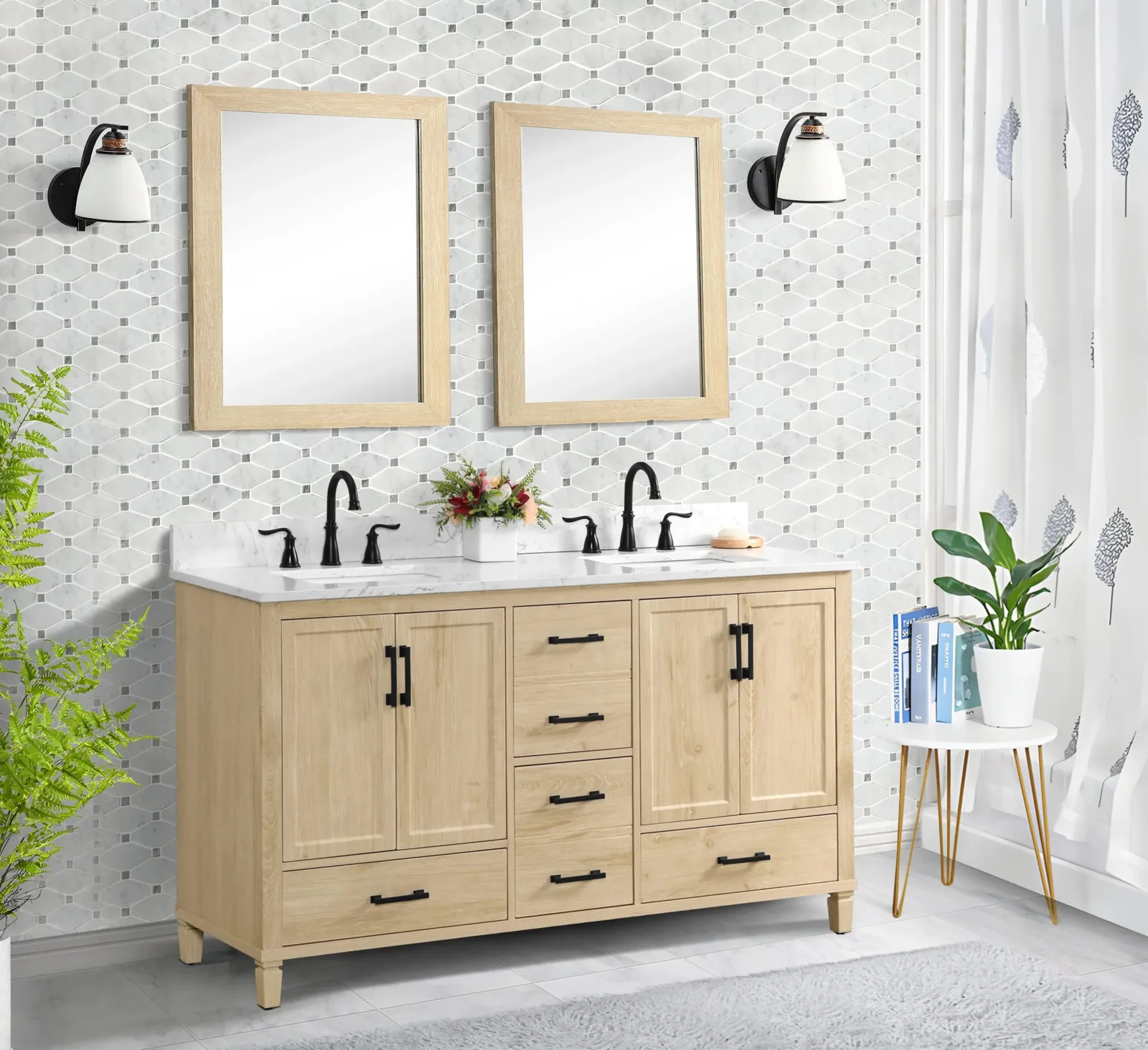
Double or single sink vanity: is a second sink worth the counter space?
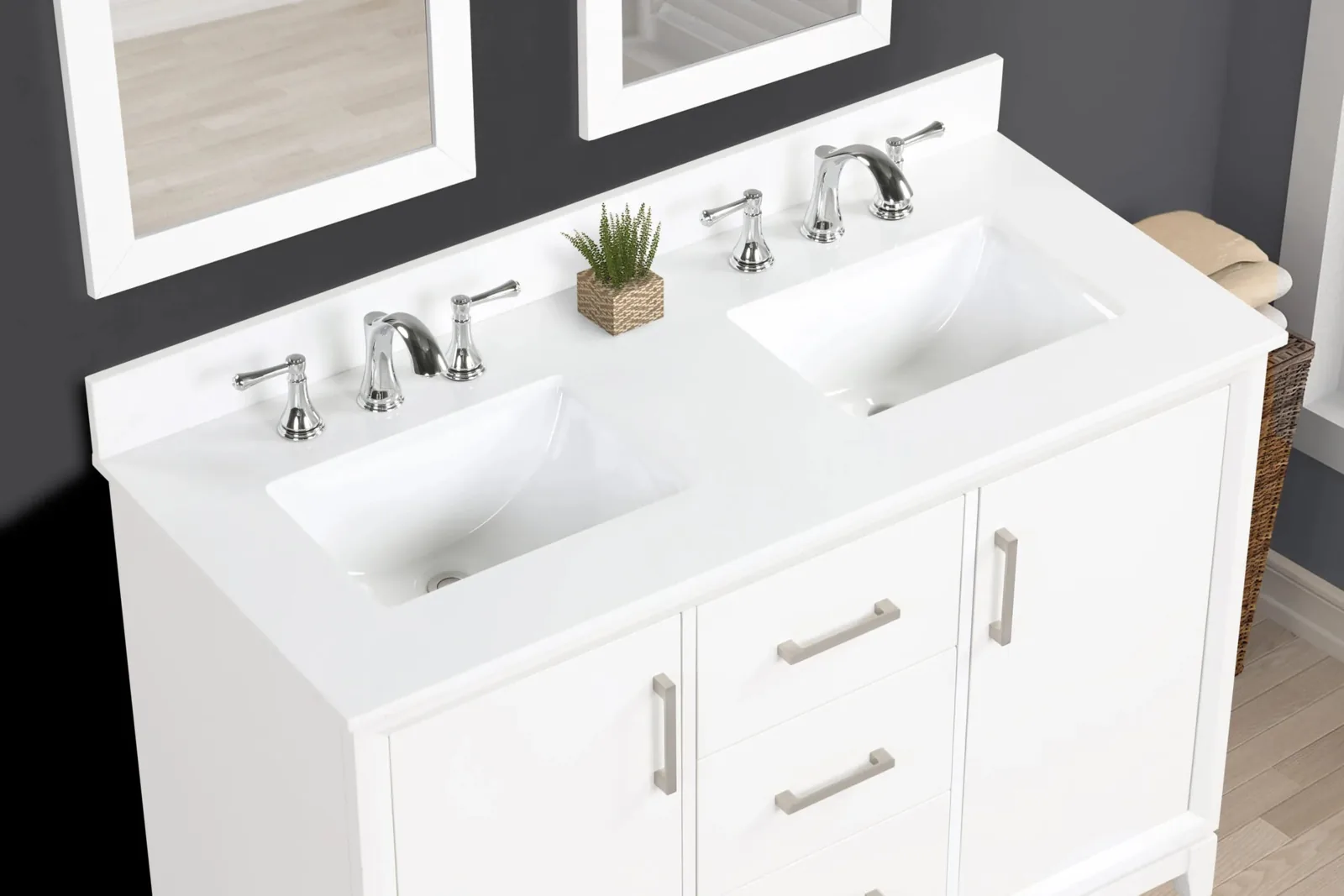
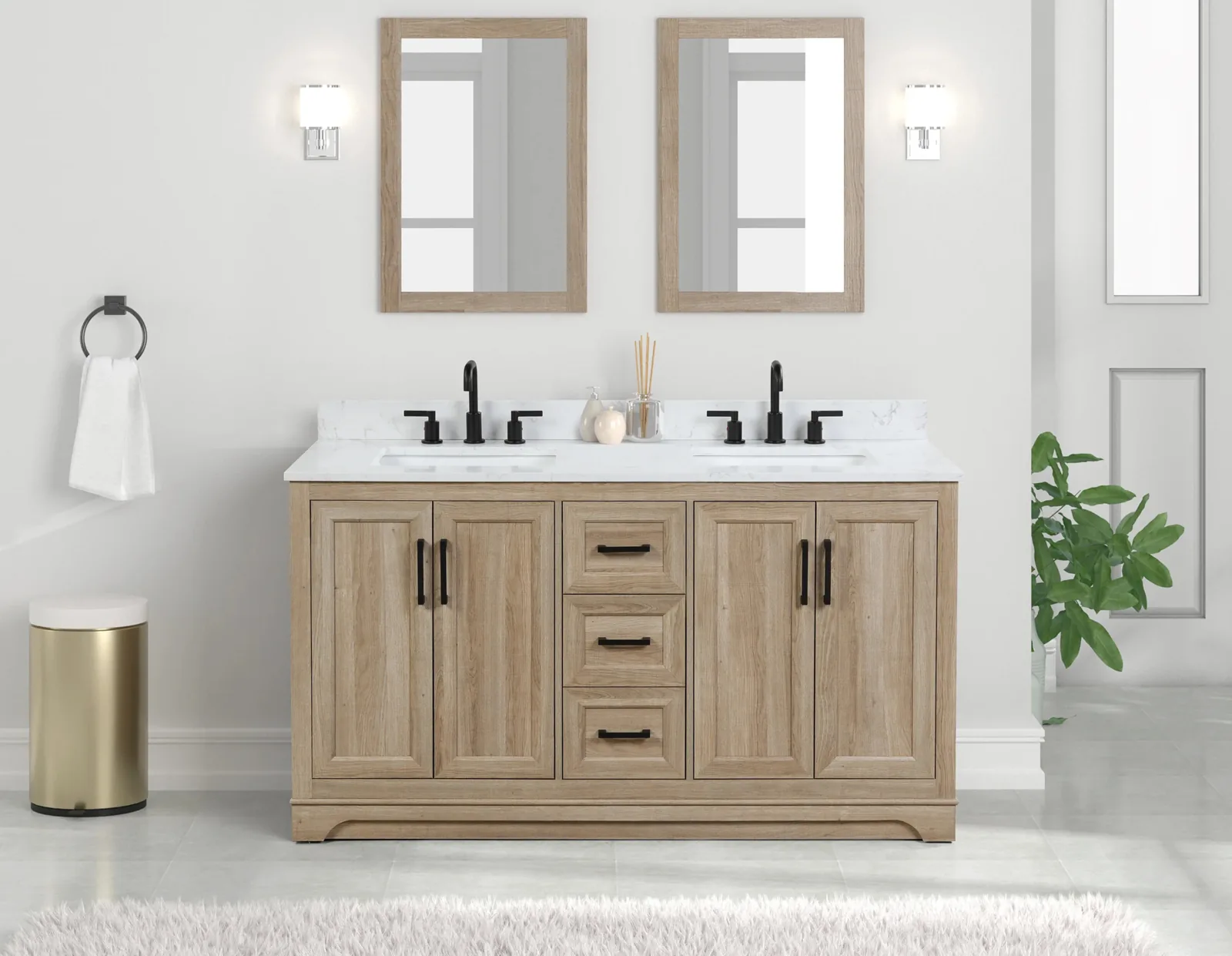
Choose two sinks when two people get ready at the same time and the wall is wide enough. Choose one when counter and drawer space matter more. At HausRack, two sinks come on the 48‑inch light wood vanity, the 48‑inch white double sink vanity and every 60‑inch model; a 48‑inch single trades the second sink for more counter and more drawers.
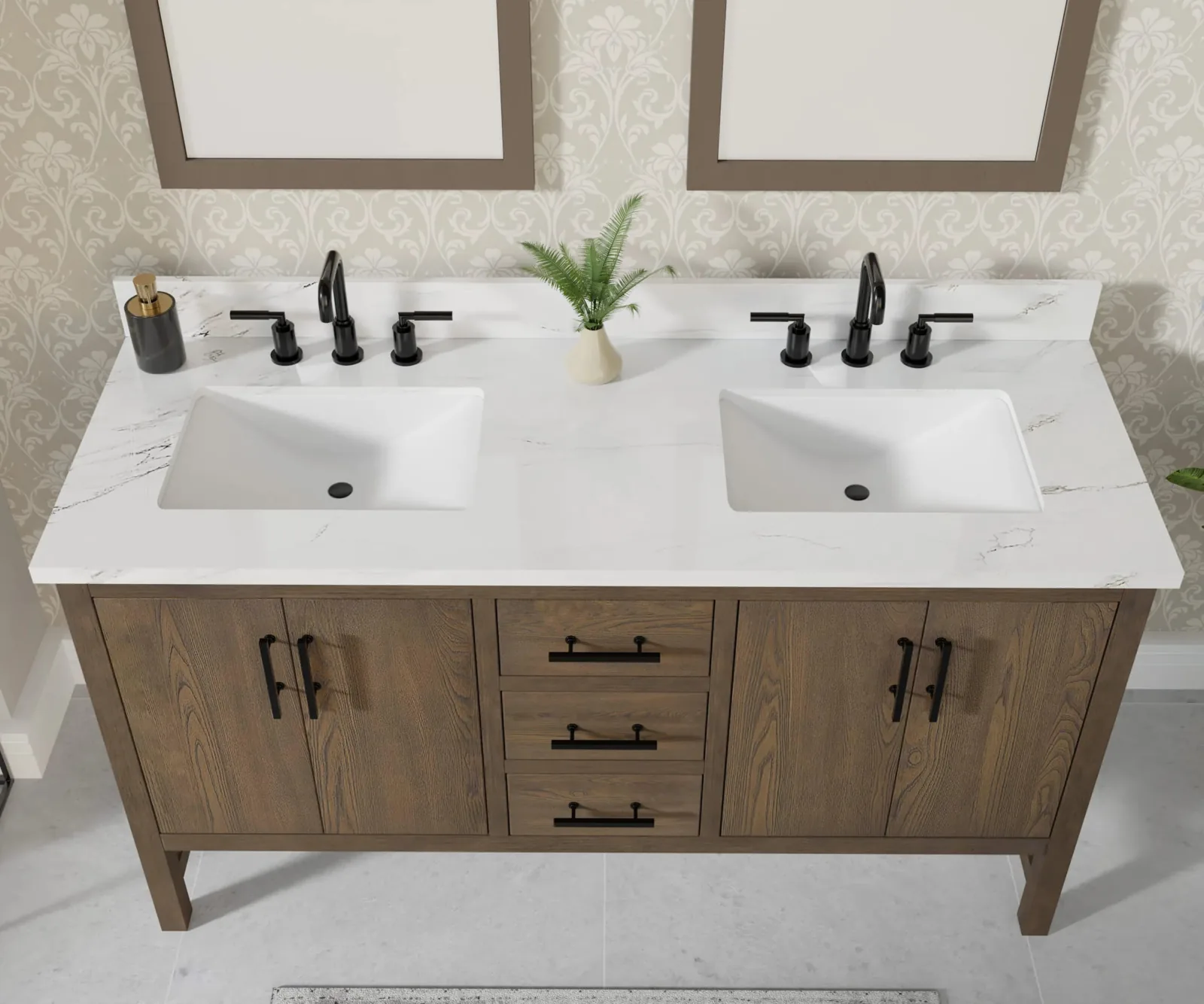
When is a second sink worth it?
A second sink earns its place when two people use the bathroom at the same time most mornings. If they don’t, one sink usually gives more back: open counter, more drawers and one faucet to keep clean.
- Two people at the mirror at once, most days: two sinks.
- One main user, or mornings that don’t overlap: one sink and more counter.
- Plenty of hair tools and bottles out on the counter: one sink, or a 60‑inch double rather than a 48.
What do you give up with two sinks?
Counter and storage. The trade is clearest at 48 inches, where we carry both kinds:
| 48-inch vanity | Sinks | Storage |
|---|---|---|
| Light wood vanity | Two | Two drawers and four doors |
| White double sink vanity | Two | Three soft-close drawers and two doors |
| Slim light wood vanity | One | Five soft-close drawers and two doors |
| Light gray vanity | One | Six drawers and two doors |
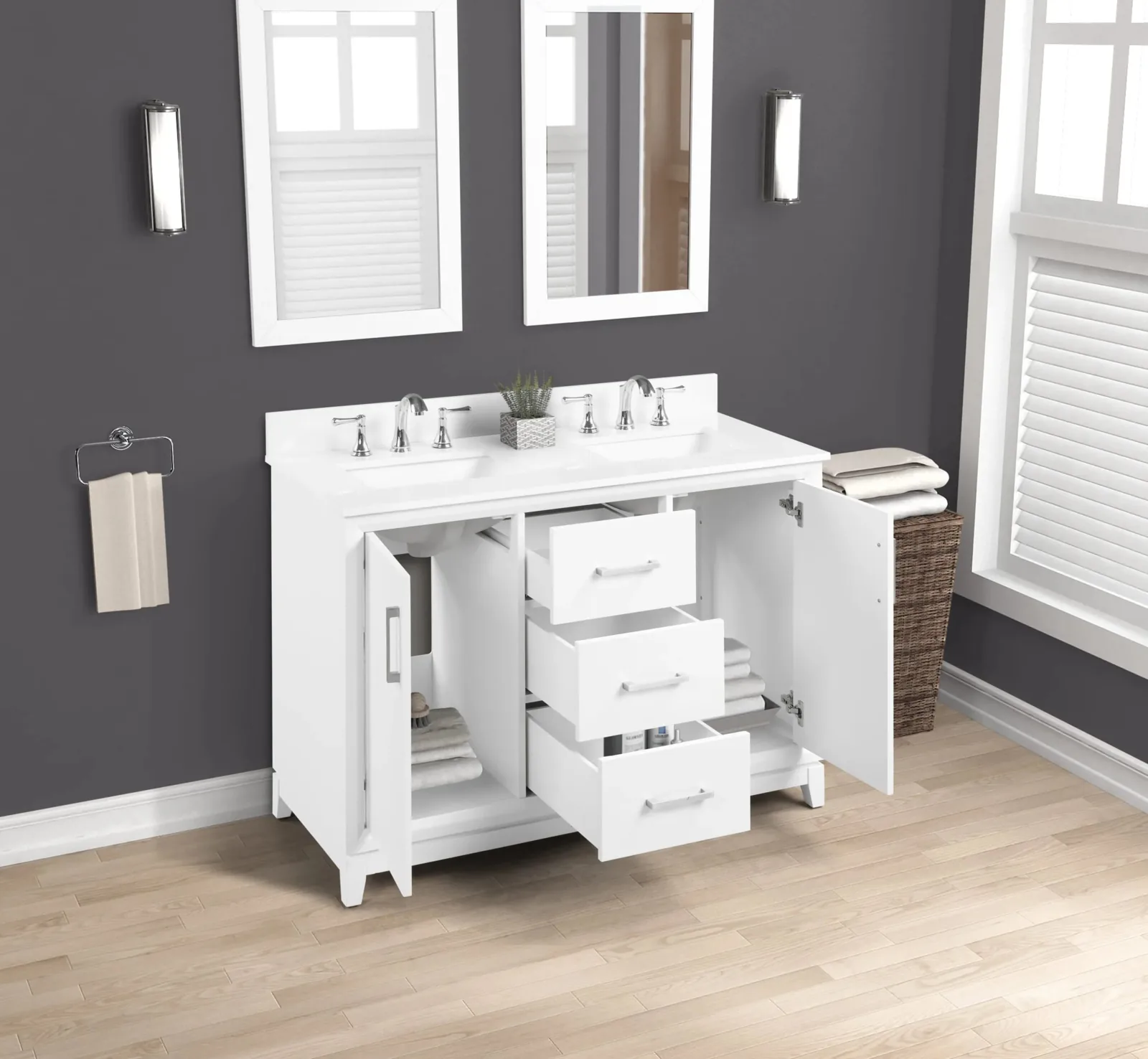
Two bowls in one top also leave less flat counter between them, and you buy two faucets. Check the faucet hole spacing at each bowl before you buy a faucet.
At 60 inches the gap narrows. The 60‑inch white marble vanity has two sinks with six drawers and four doors.
How much wall does a double vanity need?
Start with the real width. HausRack’s 48‑inch doubles measure 49 inches across and the 60‑inch doubles 61, so measure the wall for those numbers, not the size name.
Then think about the sinks, not just the cabinet. The NKBA bath planning guidelines, citing the International Plumbing Code, set a minimum distance from each sink’s center to a side wall and between two sink centers. Add them up for a vanity with a wall at each end:
| Minimums | 15 inches from each wall to the nearest sink center, plus 30 between the two centers, or 60 inches in all. |
|---|---|
| NKBA’s recommendations | 20 from each wall plus 36 between, or 76 inches in all. |
That doesn’t rule out a 48‑inch double. It depends on where its two bowls sit and whether one end is open to the room. Ask us for the sink-center spacing on the model you like, and ask the village what it enforces. Our vanity sizing guide covers depth and the space in front.
Can you turn a single-sink vanity into a double?
It can be done, but the plumbing changes, not just the cabinet. A second sink needs its own hot and cold supply lines and a drain connection, and the wall behind a single vanity is set up for one sink. A new vanity that sits on the existing lines is a simpler job than one that needs new ones.
In Willow Springs, talk to the village before work starts. Its Building Department page (opens in a new tab) says work that involves plumbing or electrical systems requires a building permit, that every permit requires a registered contractor, and that an approved permit covers only what you submitted. If a one-sink plan turns into a two-sink plan, tell the village.
Which vanities from HausRack have two sinks?
- 48 inches: the light wood vanity has a Carrara engineered stone top; the white double sink vanity has a crystal white engineered stone top.
- 60 inches: white marble, light wood, antique elm and slim light wood, which is only 19 inches deep; the farmhouse option has two apron-front sinks. The natural wood shelf and light gray options are pictured with two sinks too; confirm the set when you call.
Call (708) 449-4055 to confirm exactly what comes with the vanity you pick. Our guide to what to ask before buying a bathroom vanity lists the questions.
What should you have ready when you call?
- The wall: its full width, and whether each end meets a wall, a tub or open floor.
- The plumbing: where the drain and water lines come out now, measured from the floor and from one end.
- The people: who uses the sink, and when.